 TIMEBUCKS
Low minimum
payout of just
$3 — start
earning today!
If you’re new to online trading and wondering how to trade on Deriv for beginners, you’re in the right place.
Deriv is one of the most beginner-friendly trading platforms available in Kenya today — you can open a free account in minutes, practice with virtual money, and deposit using M-Pesa when you’re ready to go live.

But trading also comes with real risk, and getting started the right way matters more than starting fast.
This guide walks you through every step, from zero to your first real trade.
How Does Trading on Deriv Work?
To trade on Deriv, you create a free account, choose an asset (like a synthetic index or forex pair), predict whether the price will go up or down, set your trade amount, and place the trade.
If your prediction is correct, you profit. If not, you lose your stake. You can start practising immediately with a free demo account loaded with $10,000 in virtual funds — no deposit required.
What is Deriv? A Quick Overview for Beginners
Deriv (formerly Binary.com) is an international online trading platform that has been operating since 1999. It serves over 2.7 million traders worldwide and is especially popular in Kenya and across East Africa.
On Deriv, you can trade:
- Synthetic indices — Algorithm-based markets that run 24/7, including weekends
- Forex (currency pairs) — EUR/USD, GBP/USD, USD/KES, and more
- Cryptocurrencies — Bitcoin, Ethereum, Litecoin (as CFDs, no wallet needed)
- Commodities — Gold, silver, oil
- Stock indices — DAX, Dow Jones, NASDAQ
For most Kenyan beginners, synthetic indices are the starting point. Why? Because they trade 24 hours a day, 7 days a week — even on weekends and public holidays — and they are not affected by breaking news events the way forex markets are.
Step 1: How to Open a Deriv Account in Kenya
Opening a Deriv account is free and takes about 5–10 minutes. Here’s exactly how to do it:
- Go to the Deriv website — Visit deriv.com and click “Create free account”
- Enter your email address and create a password
- Verify your email — Check your inbox and click the confirmation link Deriv sends you
- Fill in your personal details — Your full name, date of birth, and country (select Kenya)
- Set your account currency — USD is recommended as it works smoothly with M-Pesa conversion
- Agree to the terms and complete your profile
Your account is now created. At this point, you can already access the free demo account without any further steps.
Verifying Your Identity (Important for Withdrawals)
To deposit and withdraw real money, you will need to verify your identity. This is a one-time process:
- Upload a clear front and back photo of your National ID
- Upload a proof of address — a bank statement works best. Note: P.O. box addresses are not accepted. Use your physical/street address
- Wait for approval — this usually takes 1–2 business days
Tip: Do your verification early. Many beginners skip this and only find out they can’t withdraw when they want their money. Verify your account before you start trading with real funds.
Step 2: Start with the Demo Account (This Step is Not Optional)

Before you deposit a single shilling, spend time on the Deriv demo account. This gives you $10,000 in virtual funds to practice with, and it mirrors real market conditions exactly.
TIMEBUCKS
Low minimum
payout of just
$3 — start
earning today!
Here’s why the demo account matters:

- You learn how the platform works without any financial risk
- You get to understand how prices move on different instruments
- You discover what trading strategies work (and what doesn’t) for you
- You build the discipline and patience that real trading requires
How long should you practice on demo? At minimum, two to four weeks. Many experienced traders spent months on demo before going live. The goal is not to rush — the goal is to understand what you’re doing.
To access the demo account: Log in → Click on your account balance at the top → Select “Demo account” → Start trading.
Step 3: Understand the Trading Platforms on Deriv
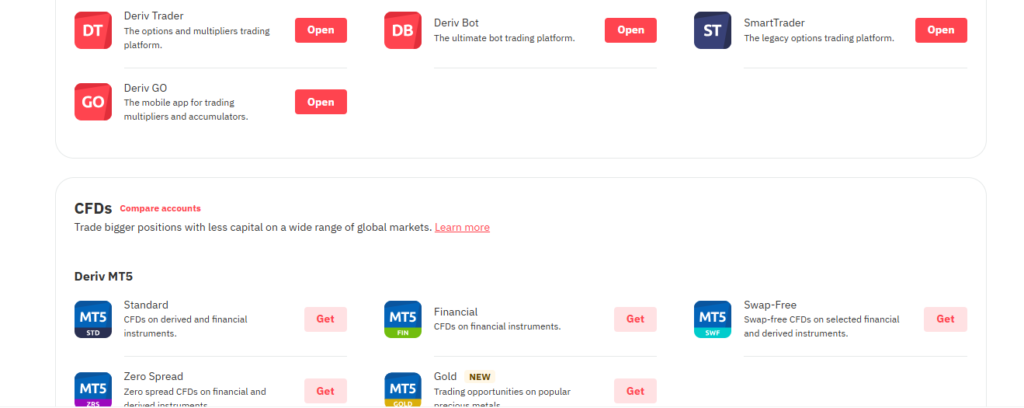
Deriv offers several platforms. As a beginner, you only need to know about two:
TIMEBUCKS
Low minimum
payout of just
$3 — start
earning today!
Deriv Trader (Recommended for Beginners)
This is Deriv’s main platform. It’s clean, simple, and designed for trading digital options and synthetic indices. You’ll use this for basic Rise/Fall trades, Even/Odd, and other straightforward trade types.
Deriv MT5 (For Intermediate Traders)
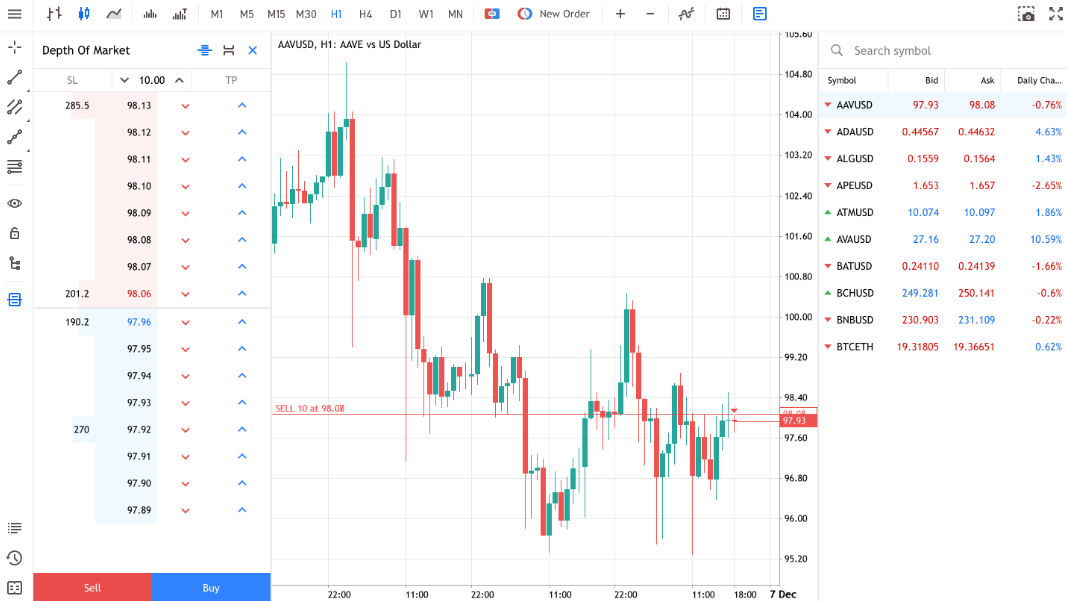
MetaTrader 5 is a more advanced platform used for forex CFD trading. It has more charts, indicators, and tools. You’ll grow into this as your skills develop. Don’t worry about MT5 yet if you’re just starting.
Deriv Bot
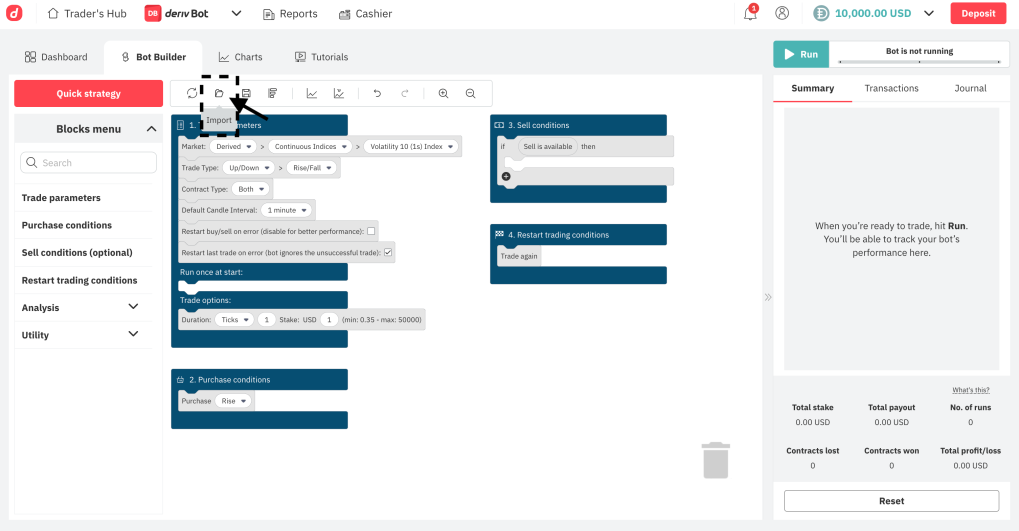
An automated trading tool where you can build trading bots using a drag-and-drop interface — no coding required. It’s popular in Kenya but should only be used once you understand manual trading first. Bots can lose money just as fast as they make it.
Step 4: Learn the Basic Trading Concepts
Before you place a trade, you need to understand a few key terms. Here’s a simple breakdown:
Buy / Rise: You predict the price will go up. If it does, you profit.
Sell / Fall: You predict the price will go down. If it does, you profit.
Stake: The amount of money you are risking on a single trade. Start with the minimum.
Payout: The amount you receive if your trade is correct.
Stop Loss: A setting that automatically closes your trade if it moves too far against you — it limits how much you can lose.
Take Profit: A setting that automatically closes your trade when it reaches a profit level you’ve set.
Leverage: A tool that lets you control a larger trade with a smaller amount of money. For example, 1:100 leverage means $1 controls a $100 trade. Leverage magnifies both profits and losses — use it carefully or not at all as a beginner.
Synthetic Indices Examples:
- Volatility 10 Index — Lower volatility, slower movements. Good for beginners
- Volatility 75 Index — Higher volatility, faster and bigger price moves
- Boom 300 / Crash 300 — Prices mostly move in one direction, with sudden spikes or drops
- Step Index — Moves in small, fixed steps. Predictable but slow
Beginner recommendation: Start with Volatility 10 or Volatility 25. These move more slowly and give you time to learn without losing money too quickly.
Step 5: How to Deposit Money on Deriv via M-Pesa
When you’re ready to trade with real money, here’s how to deposit using M-Pesa in Kenya:
- Log in to your Deriv account
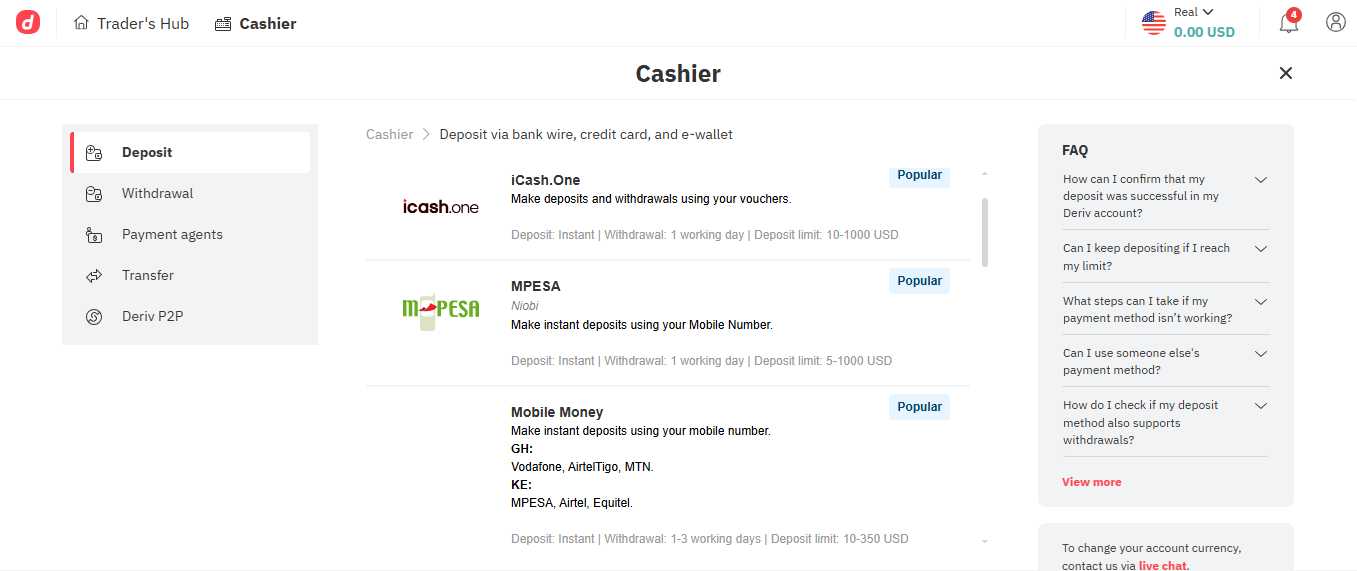
- Click “Cashier” in the top menu
- Select “Deposit”
- Choose M-Pesa as your payment method
- Enter the amount (minimum $10, maximum $1,000 per transaction)
- Follow the on-screen instructions — you’ll receive a prompt on your phone to confirm the payment
- Funds are usually credited within minutes to 1 working day
Other deposit options available in Kenya:
- Airtel Money
- Equitel
- Bank transfer (minimum $50)
- Cryptocurrency (Bitcoin, Ethereum, USDT — minimum $5)
- E-wallets: Skrill, Neteller (minimum $10)
Deriv does not charge deposit or withdrawal fees — a genuine advantage over many other brokers.
Step 6: Placing Your First Real Trade on Deriv
Once your account is funded, here’s how to place a trade on Deriv Trader:
- Log in and switch from your demo to your real account
- Select your market — Click on the asset name (e.g., Volatility 10 Index)
- Choose your trade type — For beginners, start with Rise/Fall (also called Up/Down)
- Set your duration — How long should the trade last? You can choose from ticks (seconds) to hours or days. Beginners should start with 5 to 15 minutes
- Enter your stake — Start small. Type in $1 or $2 to begin. Never stake more than 2–5% of your account on a single trade
- Check the payout — Deriv shows you exactly how much you’ll win if you’re correct
- Click Rise or Fall — Based on your analysis, click the direction you predict
- Wait for the trade to close — At the end of the duration, Deriv automatically settles the trade
That’s it. If the price moved in your predicted direction, the profit is added to your account instantly.
Deriv Trading Tutorial: Understanding Trade Types for Beginners
Deriv offers several trade types. Here are the most beginner-friendly ones explained simply:
Rise/Fall (Up/Down) Predict whether the price will be higher or lower than the current price when your trade expires. This is the simplest trade type and the best place to start.
Higher/Lower Similar to Rise/Fall, but you set a specific target price. The price must be higher or lower than that target, not just the entry price.
Touch/No Touch Predict whether the price will touch a specific level during your trade — or not touch it at all. Slightly more advanced.
Even/Odd (Digits) Predict whether the last digit of the price (e.g., 1234.7) will be even or odd at the end of your trade. Pays out approximately 95% return if you win.
Matches/Differs (Digits) Predict the exact last digit of the price at the end of the trade. Higher risk, higher reward.
For beginners in Kenya: Start with Rise/Fall on Volatility 10 or 25. Once you’re comfortable, explore other trade types gradually.
Pros and Cons of Trading on Deriv as a Beginner
✅ Pros
- Free demo account with $10,000 virtual funds
- Very low minimum deposit ($5 with crypto, $10 with M-Pesa)
- Simple platform — easy for beginners to navigate
- Synthetic indices run 24/7 including weekends
- M-Pesa integration — deposit and withdraw in Kenyan shillings
- No commissions on standard accounts
- Negative balance protection — you can’t lose more than you deposit
❌ Cons
- Trading is genuinely risky — most beginners lose money at first
- High leverage available (up to 1:1000) — dangerous if misused
- Not regulated by Kenya’s CMA — no local investor protection
- Synthetic indices can be extremely volatile
- Social media hype misleads many new traders into unrealistic expectations
Risks and Warnings for New Deriv Traders
Most beginners lose money when they first start trading. This is not to discourage you — it’s simply the truth, and knowing it helps you protect yourself.
Here are the biggest mistakes new traders in Kenya make:
Trading with money they can’t afford to lose. Only trade with money that, if lost, will not affect your rent, food, or school fees.
Skipping the demo account. Many beginners jump straight to real money and blow their account in the first week.
Using too much leverage. Leverage makes it possible to make big profits quickly — but also to lose everything just as fast. Beginners should use 1:10 or lower, or avoid leverage altogether.
Chasing losses. After a losing trade, the temptation is to place a bigger trade immediately to “recover.” This is how accounts get wiped out in minutes.
Trusting Deriv bot sellers on social media. Many people on TikTok and WhatsApp sell bots that they claim will earn you daily profits. Most of these do not work consistently, and some are outright scams.
Expert Tips for Beginner Deriv Traders in Kenya
1. Spend at least one month on demo before going live. There’s no rush. The markets will always be there.
2. Start with the smallest possible stake. Begin with $1 trades. Learn how prices move before increasing your stake.
3. Set a daily loss limit and stick to it. Decide your maximum loss per day — say $5 or $10 — and stop trading the moment you hit it.
4. Keep a trading journal. Write down every trade: what you traded, why you entered, what happened. Reviewing this regularly is how you improve.
5. Learn one strategy thoroughly before trying others. Jumping between different approaches confuses you and prevents improvement.
6. Treat trading as a skill, not a lottery. Successful trading takes time, study, and discipline. Think in terms of months and years, not days.
7. Use stop-loss on every trade. This is non-negotiable. A stop-loss limits your downside and protects your account.
8. Begin with a free Deriv demo account here — there is no better first step.
Frequently Asked Questions (FAQs)
How do I start trading on Deriv as a complete beginner?
Start by creating a free account on Deriv’s website, then access the demo account (preloaded with $10,000 virtual funds). Practice on the demo for several weeks, learn Rise/Fall trading on Volatility 10 or 25 Index, and only deposit real money once you are consistently making good decisions on demo.
What is the minimum amount to trade on Deriv in Kenya?
You can start with as little as $1 per trade. The minimum deposit via M-Pesa is $10 (approximately Ksh 1,300). For cryptocurrency deposits, the minimum is $5. This makes Deriv one of the most accessible brokers for Kenyan traders.
Which Deriv platform is best for beginners?
Deriv Trader is the best platform for beginners. It has a clean, simple interface and is designed for options and synthetic index trading. MT5 is more advanced and is better suited for intermediate traders who want to trade forex CFDs.
What should a beginner trade on Deriv?
Start with synthetic indices — specifically the Volatility 10 or Volatility 25 Index. Use the Rise/Fall trade type and begin with very small stakes. Synthetic indices trade 24/7, are not affected by news events, and move more predictably than forex pairs for new traders.
How do I deposit money on Deriv using M-Pesa?
Log in to your account → Go to Cashier → Click Deposit → Select M-Pesa → Enter the amount (minimum $10) → Confirm via your Safaricom phone. Funds are credited within minutes to 1 working day. Deriv charges no fees on deposits.
Can I make money trading on Deriv?
It is possible to make money on Deriv, but it requires skill, discipline, and time. Most beginners lose money initially. Trading should never be viewed as a guaranteed income or a quick way to get rich. Only trade what you can afford to lose, and invest in learning before risking real money.
What is a demo account on Deriv?
A Deriv demo account is a practice account that comes preloaded with $10,000 in virtual (fake) money. It mirrors real market conditions exactly but uses no real funds. Any Kenyan trader can open a demo account without making a deposit — it is completely free.
Is it safe to trade on Deriv in Kenya?
Deriv is a legitimate, established broker with over 20 years of history, negative balance protection, and client funds kept in segregated accounts. However, it is not regulated by Kenya’s CMA, so you do not have access to local investor protections. Trading itself carries significant financial risk regardless of the broker you use.
How long does it take to learn to trade on Deriv?
There is no fixed timeline. Some traders become consistent within three to six months of serious practice; others take longer. The most important things are consistent learning, keeping a trading journal, and never risking money you cannot afford to lose.
Final Word: Trade Smart, Not Fast
Learning how to trade on Deriv as a beginner is genuinely achievable — but it takes patience and the right approach. The traders who succeed are not the ones who start with the most money. They are the ones who took time on demo, learned from their mistakes, and developed real discipline before going live.
Start where you are. Use the free demo. Take your time.
👉 Open your free Deriv demo account here — no deposit, no risk, no pressure.
Read also:
- Deriv Review 2026: Is This Broker Safe for Kenyan Traders?
- Is Deriv Regulated in Kenya?
- Is Deriv Safe or Risky?
⚠️ Disclaimer: This article is for educational purposes only and does not constitute financial or investment advice. Trading on Deriv involves significant risk of capital loss. Never invest money you cannot afford to lose. Past performance of any trading strategy does not guarantee future results. Always conduct your own research before making any financial decisions.
TIMEBUCKS
Low minimum
payout of just
$3 — start
earning today!