
 TIMEBUCKS
Low minimum
payout of just
$3 — start
earning today!
Introduction: Can You Really Start Trading With Zero Experience?
If you’ve been wondering how to start trading with no experience, the honest answer is: yes, you can start — but not by diving straight into live markets with real money.
Every successful trader alive today was once a complete beginner who knew absolutely nothing.

The difference between those who made it and those who blew their accounts comes down to one thing: preparation before action.
Trading is a skill. Just like driving a car or learning to cook, nobody is born knowing how to do it. But unlike driving, the consequences of skipping the learning phase can cost you real money — sometimes all of it — very fast.
This guide is your starting point. We’ll walk through everything step by step — what trading actually is, how to teach yourself, the fastest way to learn, the mistakes most beginners make, and how to build a realistic foundation before you risk a single shilling.
How Do You Start Trading With No Experience?
Start by learning the basics of how markets work, then open a free demo account to practice with virtual money. Study one trading strategy at a time, paper trade for at least 60 days, and only deposit real money once you are consistently profitable in practice. Never skip the demo stage.
What Is Trading? (The Basics Every Beginner Must Know)
Before anything else, you need to understand what you’re actually doing when you trade.
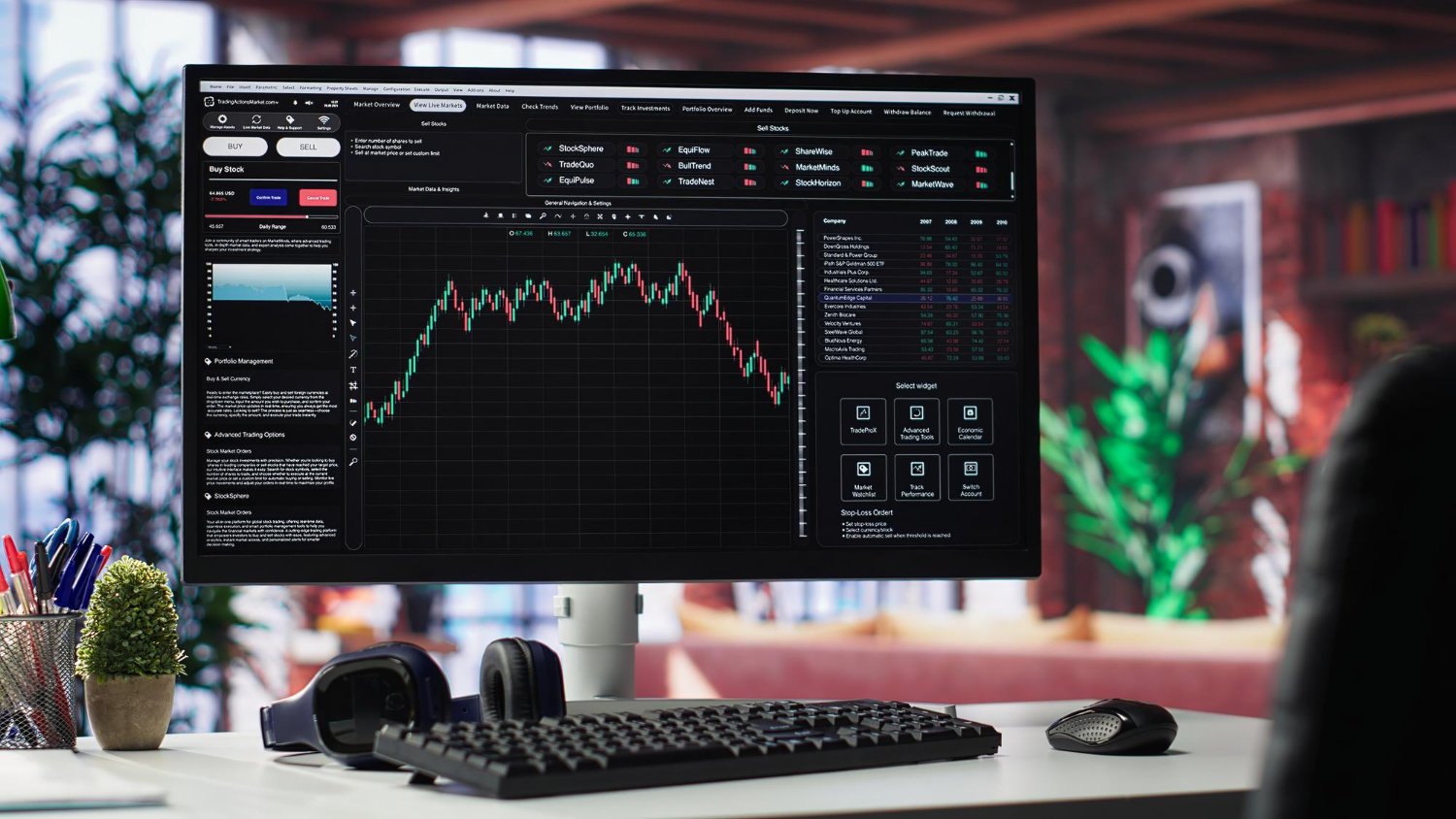
Trading means buying and selling financial instruments — currencies, stocks, commodities, indices — with the goal of making a profit from price movements. You’re essentially making a bet: will the price go up or down?
There are several types of trading you’ll come across as a beginner:
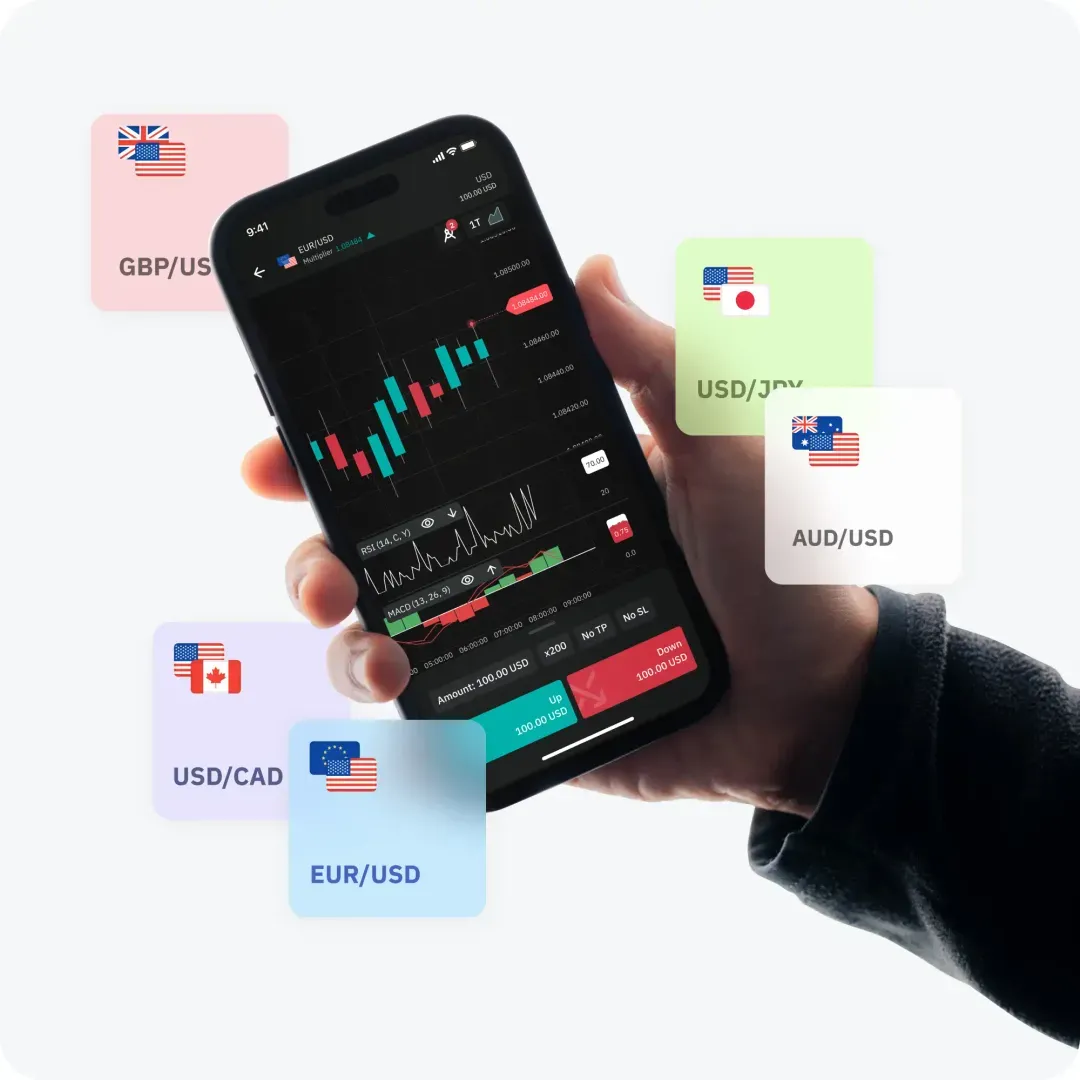
- Forex trading — buying and selling currency pairs like USD/KES, EUR/USD
- Stock trading — buying shares in companies like Safaricom or Apple
- Commodities trading — gold, oil, agricultural products
- Indices trading — trading a basket of stocks (like the NSE 20 index)
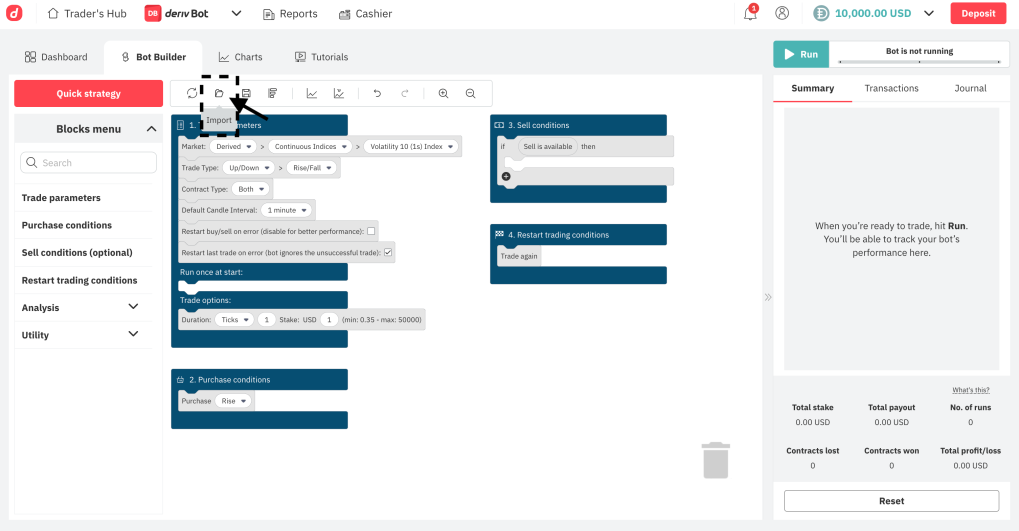
- Synthetic indices — computer-generated markets available 24/7 on platforms like Deriv
- Binary options — fixed-outcome trades where you win or lose a set amount
As a complete beginner, focus on understanding one market before spreading yourself thin. Most self-taught traders recommend starting with forex or a simple stock market.
Trading for Absolute Beginners: The 7-Step Roadmap
This is the structured path that gives you the best chance of becoming a competent trader — without losing your savings in the process.
Step 1: Learn How Markets Actually Work
You cannot trade something you don’t understand. Before touching any platform, spend time learning the foundations:
- What makes prices move up and down?
- What is a pip, a lot, a spread, and a margin?
- What is leverage and why is it dangerous?
- What is a stop loss and why does every trader need one?
- What is the difference between going long (buying) and going short (selling)?
Free resources to start with:
TIMEBUCKS
Low minimum
payout of just
$3 — start
earning today!
- Investopedia (investopedia.com) — the most comprehensive free trading dictionary and tutorial site
- Babypips (babypips.com) — specifically designed for forex beginners, free and structured like a school
- Deriv Academy — free educational content focused on the products available on Deriv
- YouTube — search for “forex for beginners” or “trading basics 2026” — tons of quality free content
Aim to spend 2–4 weeks in pure learning mode before you open any trading account, even a demo.
Step 2: Choose ONE Market and ONE Platform
One of the biggest beginner mistakes is trying to trade everything at once — forex, crypto, synthetic indices, binary options — all at the same time. You end up understanding nothing deeply.

Pick one market. Then pick one platform.
For Kenyan beginners, Deriv is a popular starting point because:
TIMEBUCKS
Low minimum
payout of just
$3 — start
earning today!
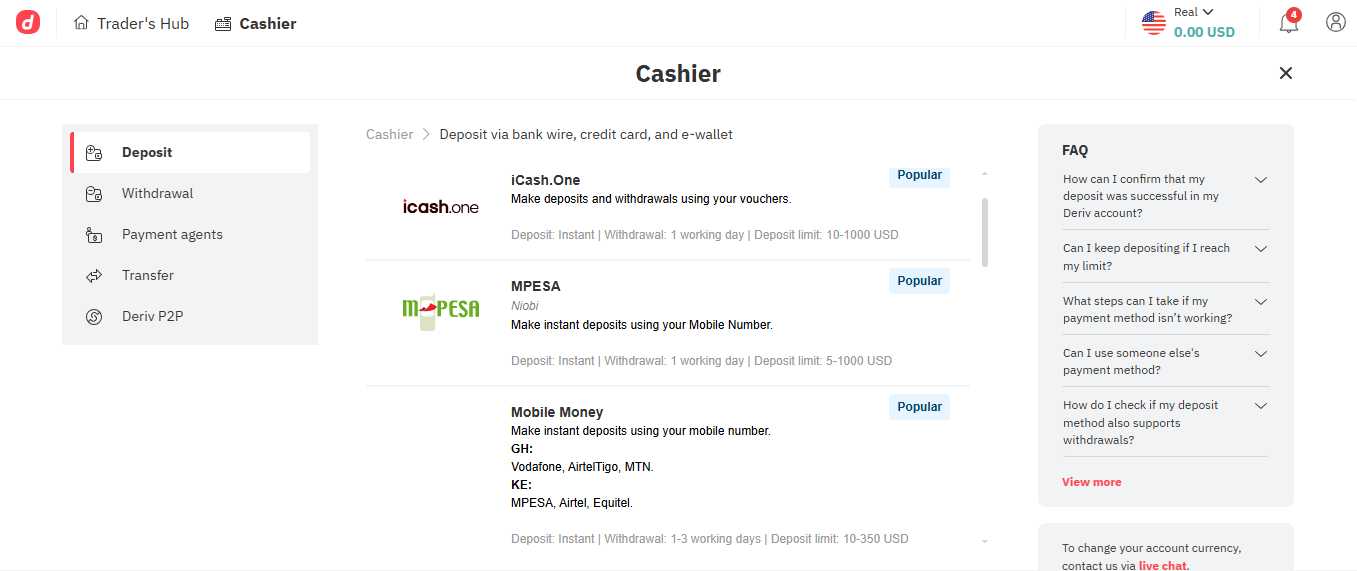
- It supports MPesa deposits and withdrawals
- It has a free demo account with no time limit
- It offers multiple instruments so you can explore at your own pace
- The minimum deposit (around KES 650) is very accessible
👉 Open a free Deriv demo account here — no real money required to start.
Step 3: Open a Demo Account and Treat It Like Real Money
A demo account gives you a virtual balance — usually $10,000 — to practice with. The charts are real, the price movements are real, but the money is not. This is your training ground.
The temptation is to be reckless on demo because “it’s not real money.” Resist this. Trade your demo account exactly as you would trade real money:
- Use the same position sizes you would use with real funds
- Apply stop losses on every single trade
- Follow a trading plan, don’t just click randomly
- Record every trade in a journal
The goal of demo trading is not to make virtual profit. It’s to build disciplined habits that you’ll carry into real trading.
Step 4: Learn One Trading Strategy (And Master It)
A trading strategy is a set of rules that tells you when to enter a trade, when to exit, and how much to risk. Without a strategy, you are gambling — not trading.
Here are beginner-friendly strategies to study:
Support and Resistance — identifying price levels where the market tends to reverse. This is the foundation of most other strategies and the best place for beginners to start.
Moving Averages — using average price lines to identify trend direction. When price is above the moving average, the trend is up. Simple and effective.
Price Action Trading — reading candle patterns (like pin bars, engulfing candles) to predict market direction. No indicators needed — just the chart.
Pick one. Learn it deeply. Test it on demo for at least 30–60 days before deciding if it works for you.
Step 5: Study Risk Management — This Is More Important Than Strategy
Here’s a truth that most trading gurus on social media won’t tell you: your risk management will save your account far more than any strategy will.
Risk management means controlling how much you lose on any single trade and any single day. The basic rules:
- Never risk more than 1–2% of your account on one trade. If you have $100, that’s $1–$2 maximum per trade.
- Always use a stop loss. A stop loss is an automatic order that closes your trade if the price moves too far against you. Never trade without one.
- Set a daily loss limit. If you lose 3–5% of your account in one day, stop trading. Come back tomorrow with a clear head.
- Never “revenge trade.” Revenge trading means placing a bigger trade to recover a loss quickly. This is how accounts get wiped.
Step 6: Keep a Trading Journal
A trading journal is a simple record of every trade you take. Write down:
- Date and time
- What you traded (e.g., EUR/USD)
- Why you entered (what did the chart show?)
- Entry price, stop loss, take profit
- Result (win or loss)
- How you felt (emotional state)
- What you could have done better
After 30–50 trades, review your journal. You’ll start to see patterns — which setups work, which don’t, and what emotional triggers cause you to make bad decisions. This feedback loop is how self-taught traders improve faster than those who just trade randomly.
Step 7: Transition to Real Money — Slowly
After 60–90 days of consistent, disciplined demo trading, you may be ready to trade with real money. But go slowly.
Start with the absolute minimum deposit. On Deriv, that’s as low as $5. The goal is not to make big money immediately — the goal is to experience what real-money emotions feel like and manage them.
Many traders discover that even after being profitable on demo, real money trading feels completely different. Fear and greed change your decision-making. Starting small lets you experience this and adjust without major losses.
Read also: What Is Forex Trading: A Complete Beginner’s Guide for 2026
How to Learn Trading Fast: The Self-Taught Trading Guide
You don’t need a university degree or an expensive course to become a trader. Thousands of self-taught traders have learned purely through free resources, practice, and consistency. Here’s how to speed up your learning without cutting corners:
Immerse yourself daily. Spend at least 1–2 hours per day studying markets, even if you’re not actively trading. Read financial news. Watch how prices react to economic announcements. Follow experienced traders on X (Twitter) or YouTube — observe how they think, not just what they trade.
Focus on understanding, not signals. Many beginners pay for “signals” — someone else telling them when to buy and sell. This teaches you nothing and makes you dependent. Learn why a trade makes sense, not just what trade to place.
Backtest your strategy. Look at historical charts and test whether your strategy would have worked in the past. Most platforms allow you to scroll back and practice on old price data. This lets you test hundreds of trades in hours rather than months.
Find a community. Trading alone is hard. Find online communities (forums, Discord groups, Telegram channels) where serious traders share ideas and critique each other’s analysis. Be careful though — many online trading groups are full of scammers promoting signals or fake account results.
Read at least one good trading book. Some classics that self-taught traders swear by:
- Trading in the Zone by Mark Douglas — the best book ever written on trading psychology
- The Disciplined Trader by Mark Douglas
- Japanese Candlestick Charting Techniques by Steve Nison — for price action beginners
Beginner Trading Mistakes You Must Avoid
Understanding these mistakes before you make them could save you months of losses and frustration.
Mistake 1: Skipping the Demo Stage
This is the number one mistake. Beginners get excited, deposit KES 5,000, and start trading immediately without learning anything. They lose it within days and conclude “trading doesn’t work.” It does work — but only for those who prepare.
Mistake 2: Trading Without a Stop Loss
A stop loss is not optional. It is the single most important protective tool in trading. Traders who skip stop losses routinely watch small losses turn into account-destroying disasters. Set a stop loss on every single trade, no exceptions.
Mistake 3: Using Too Much Leverage
Leverage lets you control a big position with a small deposit. It feels exciting — until a trade goes wrong and your account is wiped in minutes. Beginners should use the lowest leverage available (1:2 to 1:10) until they fully understand how it works.
Mistake 4: Chasing Losses
You had a bad day. You lost KES 2,000. So you place a bigger trade to “win it back.” This almost always results in losing even more. Losses are part of trading. The best traders accept them calmly and move on. Emotional trading is the fastest path to an empty account.
Mistake 5: Following Too Many “Gurus”
Social media is full of people showing Lamborghinis and trading screenshots claiming they make millions per day. Most of it is fake or heavily cherry-picked. Find 1–2 reliable, honest educators and stick with them. Avoid anyone who promises guaranteed profits.
Mistake 6: Trading Too Many Instruments at Once
Jumping between EUR/USD, Gold, Volatility 75, and crypto in the same day means you understand none of them. Focus on one or two instruments until you truly know how they behave.
Mistake 7: Having No Trading Plan
“I’ll trade when I feel like it and exit when it looks good” is not a plan — it’s a recipe for random, emotional decisions. Your trading plan should define: what you trade, when you trade, your entry rules, your exit rules, and your risk per trade. Write it down and follow it.
Mistake 8: Expecting Fast Results
Becoming a consistently profitable trader typically takes 1–3 years of serious practice. Anyone who tells you otherwise is either lying or selling something. Set realistic expectations. The traders who stick it out through the learning curve are the ones who eventually succeed.
Pros and Cons of Self-Teaching Trading
Pros
- Completely free — all the information you need is available online at no cost
- Learn at your own pace without pressure
- Build genuine understanding rather than just following someone else’s signals
- Demo accounts let you practice risk-free for as long as you need
- No gatekeeping — anyone with an internet connection and MPesa access can start
Cons
- Takes longer without structured guidance
- Easy to pick up bad habits if you learn from the wrong sources
- Requires strong self-discipline to stick to a learning schedule
- Emotional management is harder to develop alone — no accountability partner
- Risk of information overload — too many strategies and systems to choose from
Expert Tips: What Experienced Traders Wish They Knew at the Start
“The market will still be there tomorrow.” Don’t feel like you’re missing out if you don’t take a trade. Patience and selectivity are virtues. The best traders take fewer trades, not more.
“Protect your capital first.” Your number one job as a beginner is not to make money — it’s to not lose your account. If you keep your capital intact while learning, you’ll always have the ability to try again and improve.
“Consistency beats perfection.” You don’t need a strategy that wins 90% of the time. A strategy that wins 50% of the time but makes more on winners than it loses on losers is perfectly profitable. Focus on consistency, not finding the “perfect” system.
“Your first 100 trades are tuition.” Expect to lose money in the beginning. Treat early losses as the price of education. The goal of your first year is to learn — not to get rich.
“Trade what you see, not what you think.” Trade what the chart is showing you right now. Don’t hold on to a losing trade hoping the market will come back because you believe it should. The market doesn’t care what you think.
FAQs: How to Start Trading With No Experience
1. How much money do I need to start trading as a beginner?
You can open a demo account for free with no money at all. When you’re ready for real trading, platforms like Deriv allow you to start with as little as $5 (approximately KES 650). Start with the minimum — never deposit more than you can afford to completely lose.
2. How long does it take to learn trading?
Realistically, expect 6–12 months of consistent practice before you begin to understand trading well, and 1–3 years before you’re consistently profitable. Anyone promising you’ll master it in a week or a month is misleading you.
3. Can I learn trading for free?
Yes, completely. Sites like Babypips, Investopedia, and YouTube offer comprehensive free education. Demo accounts are also free and unlimited on most platforms. You don’t need to pay for a course to learn the basics.
4. What is the easiest market to trade as a beginner?
Most trading educators recommend starting with major forex pairs like EUR/USD or GBP/USD. They have tight spreads, plenty of educational material, and move in ways that can be analyzed with basic technical analysis. Avoid crypto and synthetic indices until you have solid experience.
5. Is it possible to start trading with KES 1,000?
Yes, on platforms like Deriv which support MPesa and have very low minimum deposits. However, with such a small amount your position sizes will be very limited. KES 1,000 is fine for practice with real money — don’t expect significant returns from it.
6. What is the difference between trading and investing?
Trading involves frequently buying and selling instruments to profit from short-term price movements — sometimes within minutes or hours. Investing means buying and holding assets for months or years, profiting from long-term growth. Trading is higher risk and more active; investing is slower and more passive.
7. Do I need a broker to start trading?
Yes. A broker is a platform that connects you to the financial markets. You cannot trade without one. For beginners in Kenya, Deriv is a popular option due to MPesa support, low minimums, and free demo accounts.
8. What trading platform is best for beginners in Kenya?
Deriv is widely used by Kenyan beginners for its accessibility, MPesa integration, and beginner-friendly interface. It also offers Deriv Academy for free education. MetaTrader 5 (MT5) is the industry-standard platform available through Deriv and many other brokers.
Conclusion: Your Journey Starts Before You Make Your First Trade
Learning how to start trading with no experience is completely achievable — but it requires patience, discipline, and a willingness to learn before you earn. The traders who succeed are not necessarily the smartest or the most naturally gifted. They’re the ones who respected the learning process, managed their risk carefully, and kept going when it got hard.
Your action plan right now:
- Spend 2–4 weeks on free resources (Babypips, Investopedia, YouTube)
- Open a free demo account and practice for at least 60 days
- Learn one strategy and master it before moving on
- Keep a trading journal from day one
- Only move to real money when you’re consistently disciplined — not just profitable
👉 Start with a free Deriv demo account — no real money needed, no pressure, just learning.
⚠️ Financial Disclaimer: This article is for educational and informational purposes only and does not constitute financial advice. Trading financial instruments carries a significant risk of loss. The majority of retail traders lose money. Never trade with funds you cannot afford to lose. Always do your own research and consider seeking independent financial advice before making any trading decisions.
Read also:
- What Is Forex Trading: A Complete Beginner’s Guide for 2026
- Can Forex Trading Make You Rich?
- Forex Trading Capital for Beginners in Kenya
- How Much Money Do Forex Traders Make in Kenya?
TIMEBUCKS
Low minimum
payout of just
$3 — start
earning today!