

Get High Paying Surveys
Earn money online by completing simple surveys. No experience needed.
Start Earning →Choosing the right web hosting company in Kenya is one of the most consequential decisions a business owner, blogger, or developer will make. Your hosting provider determines how fast your website loads, how often it goes down, how secure your data is, and whether your customers can reach you reliably at 2am on a Sunday as easily as they can at noon on a Monday.
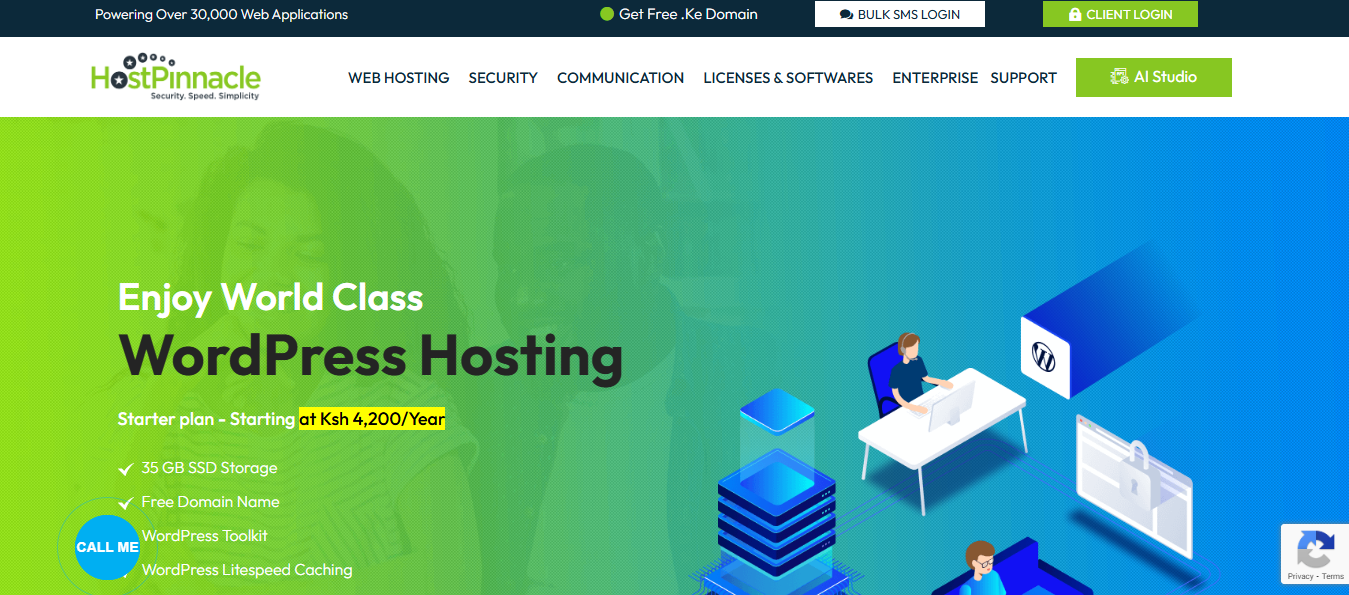
HostPinnacle has emerged as one of the most frequently discussed web hosting providers targeting the Kenyan and broader African market. With pricing in Kenya Shillings, local payment options including M-Pesa, and customer support designed around African business hours, it positions itself as a credible alternative to both international giants and other local providers.
But does it actually deliver? This review covers everything you need to know — plans, pricing, performance, security, real user feedback, and an honest comparison with competing hosts. By the end, you will have a clear answer to whether HostPinnacle is the right hosting choice for your website in 2026.
 OLYMP TRADE
Sign up and get
10,000 USD to your
demo account to
learn trading
What is HostPinnacle?
HostPinnacle is a web hosting company operating primarily in Kenya and targeting the broader East and Central African market. It offers a range of hosting services designed to serve individuals, small businesses, startups, developers, and digital agencies looking for affordable, locally supported hosting solutions.
The company provides hosting services priced and billed in Kenya Shillings, which eliminates the foreign exchange uncertainty that comes with paying international hosts in US Dollars — a practical advantage that matters significantly when the Kenya Shilling fluctuates against the Dollar.
Services offered by HostPinnacle include:
OLYMP TRADE
Sign up and get
10,000 USD to your
demo account to
learn trading

- Shared hosting (entry-level and business plans)
- WordPress hosting (optimised environments for WordPress sites)
- VPS hosting (Virtual Private Servers for developers and growing businesses)
- Reseller hosting (for freelancers and agencies managing multiple client sites)
- Domain registration (.co.ke, .ke, .com, .org, and other extensions)
- Business email hosting
- SSL certificates
HostPinnacle’s target users span a wide range — from a first-time blogger in Nairobi setting up their first WordPress site, to a digital agency in Kisumu managing hosting for twenty client websites, to an e-commerce entrepreneur in Mombasa running an online shop that cannot afford downtime.
HostPinnacle Hosting Plans Explained

Shared Hosting
Shared hosting is HostPinnacle’s entry-level offering and the most popular product among Kenyan small businesses and individual website owners. As the name suggests, your website shares server resources — CPU, RAM, and storage — with other websites on the same server.
OLYMP TRADE
Sign up and get
10,000 USD to your
demo account to
learn trading
HostPinnacle’s shared hosting plans are tiered, starting from a basic plan suitable for a simple personal website or blog, through to mid-tier plans that accommodate small business websites with moderate traffic, and higher-tier plans for established businesses with larger storage and email requirements.
What shared hosting plans typically include:
- Free SSL certificate
- cPanel control panel
- SSD storage (faster than traditional HDD storage)
- One-click WordPress installation
- Business email accounts
- Free domain (on qualifying plans)
- Daily or weekly backups (depending on plan tier)
Shared hosting is ideal for bloggers, small business websites, church or community organisation websites, portfolio sites, and any website that does not yet have the traffic volume to justify a dedicated or virtual private server. It is the most affordable entry point and the right choice for the majority of Kenyan website owners who are just starting out.
The primary limitation of shared hosting — not unique to HostPinnacle — is that during peak traffic periods, resource sharing can cause slower load times. For websites with consistently high traffic or resource-intensive applications, VPS hosting is the more appropriate choice.

WordPress Hosting
HostPinnacle’s WordPress hosting plans are configured specifically to run WordPress websites with optimised performance. WordPress powers over 40% of all websites globally and is the most popular website platform in Kenya — used by bloggers, news sites, e-commerce stores, corporate websites, and everything in between.
WordPress-optimised hosting environments typically feature server configurations tuned for WordPress, pre-installed WordPress with one-click setup, enhanced security settings specific to WordPress vulnerabilities, and performance caching tools that reduce page load times.
For Kenyan website owners using WordPress — which covers the vast majority of the market — HostPinnacle’s WordPress hosting plans offer a more tailored experience than generic shared hosting, particularly for websites prioritising speed and security.

VPS Hosting
Virtual Private Server (VPS) hosting gives your website its own dedicated portion of a physical server. Unlike shared hosting, VPS resources — CPU, RAM, and storage — are not shared with other websites. This translates to more consistent performance, greater control over the server environment, and significantly better ability to handle traffic spikes.
HostPinnacle’s VPS hosting is targeted at developers, growing businesses, e-commerce platforms, and technically proficient users who need root access, custom server configurations, or higher resource allocations than shared hosting can provide.
VPS hosting costs more than shared hosting but delivers meaningfully better performance and scalability. For a Kenyan business whose website handles online transactions, bookings, or significant daily traffic, the investment in VPS hosting is justified by the performance and reliability gains.
Reseller Hosting
Reseller hosting allows an individual or agency to purchase hosting resources in bulk from HostPinnacle and then resell portions of that hosting to their own clients under their own branding. It is the backbone of the web hosting reseller business model in Kenya.
HostPinnacle’s reseller hosting is well-suited for freelance web developers, digital agencies, IT consultants, and anyone who builds and manages websites for multiple clients. Instead of pointing each client to a third-party host, you manage everything under one account, earn from hosting margins, and build a recurring income stream.
Reseller plans typically include WHM (Web Host Manager) access, the ability to create and manage multiple cPanel accounts, white-label branding options, and scalable storage and bandwidth allocations.
Key Features of HostPinnacle
Free SSL Certificates
Every HostPinnacle hosting plan includes a free SSL (Secure Sockets Layer) certificate. SSL encrypts the connection between your website and your visitors, protecting data transmission and displaying the padlock icon in the browser address bar. Beyond security, SSL is a confirmed Google ranking factor — websites without SSL are penalised in search rankings and flagged as “Not Secure” by Chrome and other browsers. Having SSL included at no extra cost is a meaningful feature, particularly for Kenyan small businesses that cannot afford additional security costs at launch.
cPanel Control Panel
HostPinnacle uses cPanel — the industry-standard web hosting control panel — across its shared and reseller hosting plans. cPanel provides a graphical interface for managing all aspects of your hosting account without any technical coding knowledge. Through cPanel you can install WordPress and other applications with one click, manage email accounts and forwarders, create and manage databases, monitor website statistics and bandwidth usage, manage files through the built-in File Manager, and configure domain settings and subdomains. cPanel’s widespread use means there is an enormous library of tutorials, guides, and YouTube videos in both English and Swahili that Kenyan users can access to learn and troubleshoot.
SSD Storage
HostPinnacle uses SSD (Solid State Drive) storage across its hosting plans. SSDs access and retrieve data significantly faster than traditional HDDs (Hard Disk Drives) — the performance difference translates directly into faster website loading speeds. Given that Google uses page speed as a search ranking factor and that Kenyan internet users — increasingly accessing websites on mobile data — expect fast-loading sites, SSD storage is a meaningful technical advantage.
Business Email Hosting
HostPinnacle includes business email hosting with its plans, allowing you to create professional email addresses using your own domain name (e.g., info@yourbusiness.co.ke). Professional email is a basic credibility requirement for any Kenyan business — customers are far more likely to trust a business with a domain email than one communicating from a Gmail or Yahoo address. The number of email accounts available depends on the plan tier.
Website Builder
HostPinnacle provides access to a website builder tool for users who want to create a website without hiring a developer or learning WordPress. While the built-in website builder is suitable for very simple websites, most Kenyan users with any growth ambitions will find WordPress — which is available via one-click installation — a far more powerful and flexible platform for building and managing their online presence long-term.
Security Features
Security features across HostPinnacle plans include free SSL certificates, spam filtering for email accounts, firewalls at the server level, and malware scanning tools. Hosting security is a non-negotiable requirement — a hacked website damages customer trust, destroys search rankings, and can expose customer data to theft. The security features available vary by plan tier, with higher-tier plans generally receiving more robust protections.
Backups
HostPinnacle provides backup services, with the frequency and retention period depending on the plan selected. Regular backups are essential — they are your safety net in the event of accidental file deletion, a hacking incident, or a server-side failure. Before committing to any hosting plan, confirm the backup frequency, how far back backups are retained, and how easily you can restore from a backup if needed.
One-Click WordPress Installation
HostPinnacle’s cPanel integration includes Softaculous — an auto-installer that deploys WordPress (and dozens of other applications) with a single click. This eliminates the manual installation process that previously required technical knowledge, making it genuinely accessible for first-time website owners in Kenya to get a WordPress site running within minutes of purchasing hosting.
HostPinnacle Performance
Website performance — specifically loading speed and uptime reliability — is the most important technical criterion for evaluating any hosting provider.
Uptime refers to the percentage of time your website is accessible to visitors. Industry standard uptime guarantees are 99.9%, which translates to a maximum of approximately 8.7 hours of downtime per year. For a Kenyan business that relies on its website for enquiries, bookings, or online sales, even a few hours of unexpected downtime represents lost revenue and damaged credibility.
HostPinnacle advertises uptime guarantees consistent with industry standards. User feedback from Kenyan website owners generally reports reliable uptime performance for typical small business and blog workloads on shared hosting plans.
Loading speed is influenced by server hardware (SSDs improve this significantly), server location relative to the end user, caching configuration, and the efficiency of the website itself. HostPinnacle’s use of SSD storage positively impacts loading speed. For Kenyan and East African visitors, a hosting provider with servers located closer to the region — whether in Nairobi, Johannesburg, or even Amsterdam — will generally deliver faster loading times than servers based exclusively in the United States or Europe.
When evaluating HostPinnacle’s performance for your specific use case, consider the geographic location of your primary audience. If the majority of your visitors are in Kenya, server location relative to Kenya matters significantly. Always test website loading speed using tools like Google PageSpeed Insights or GTmetrix before and after migrating to any new host.
Performance and SEO connection: Google uses Core Web Vitals — which include loading speed, interactivity, and visual stability — as ranking factors. A slow-loading website hosted on an underpowered server directly damages your search rankings. Choosing a hosting provider that delivers consistent speed is therefore as much an SEO decision as a technical one.
HostPinnacle Pricing in Kenya

One of HostPinnacle’s most significant practical advantages for Kenyan users is pricing and billing in Kenya Shillings with local payment options.
Pricing structure overview:
Shared hosting plans start at entry-level price points accessible to individuals and micro-businesses, progressing through mid-tier business plans to higher-tier plans for established websites with greater resource requirements. Pricing is structured to be competitive within the Kenyan market.
Payment options include M-Pesa — Kenya’s dominant mobile money platform — as well as bank transfers and card payments. The availability of M-Pesa payment is a genuine differentiator for HostPinnacle in the Kenyan market. Most international hosting providers require payment in USD via credit card or PayPal — which excludes or inconveniences a large segment of Kenyan small business owners who do not hold international payment cards.
Domain registration is available for .co.ke and .ke domains (Kenya’s ccTLD — country code top level domain) as well as international extensions like .com, .org, .net, and others. .co.ke and .ke domains are important for Kenyan businesses targeting local search audiences, as they signal geographic relevance to both users and search engines.
Renewal pricing: As with most hosting providers globally, introductory prices are lower than renewal prices. Before committing to a plan, check the renewal rate — not just the promotional sign-up price. Budget for the renewal cost from the beginning to avoid surprises at the end of your first term.
Value for money compared to international hosts: For Kenyan users, HostPinnacle’s KES-denominated pricing eliminates currency exchange risk. When the Kenya Shilling weakens against the Dollar — as it has done periodically — the cost of hosting with an international provider effectively increases without any change in the hosting plan itself. HostPinnacle’s local currency pricing provides budgeting predictability that international hosts cannot match for the Kenyan market.
HostPinnacle Pros and Cons
Pros
Locally relevant pricing in Kenya Shillings. No currency risk, no international transaction fees, and predictable budgeting — a meaningful advantage over USD-priced international hosts for Kenyan SMEs.
M-Pesa payment acceptance. Accessible to the vast majority of Kenyan business owners regardless of whether they hold an international payment card.
Beginner-friendly setup. cPanel, one-click WordPress installation, and a straightforward account management interface make HostPinnacle accessible to first-time website owners with no technical background.
Free SSL included. A fundamental security and SEO requirement that is included across plans at no extra cost.
SSD storage. Faster than HDD-based hosting, contributing positively to website loading speed and user experience.
Local customer support. Support designed for Kenyan users and operating within East African time zones — more accessible than international hosts whose support teams may be eight or more time zones away.
Reseller hosting availability. A useful option for Kenya’s growing ecosystem of freelance web developers and digital agencies building recurring hosting revenue streams.
Cons
Resource limitations on entry-level plans. The lowest-tier shared hosting plans have storage, bandwidth, and email account limitations that may require an early upgrade as a website grows. This is not unique to HostPinnacle — it is characteristic of entry-level shared hosting industry-wide — but it is worth understanding before signing up.
Fewer global data center locations. International hosts like SiteGround, Cloudways, and Namecheap operate data centers across multiple continents, giving users more granular control over server proximity to their audience. HostPinnacle’s data center footprint is more limited, which may matter for websites with significant international traffic outside East Africa.
Less brand recognition internationally. For Kenyan businesses targeting a primarily global audience, some international clients may be more familiar with — and reassured by — internationally recognised hosting brands. This is more of a perception issue than a technical one, but worth noting.
Documentation and tutorial resources. International hosts with larger user bases have more extensive community documentation, YouTube tutorials, and third-party guides. While cPanel’s universality mitigates this, HostPinnacle-specific troubleshooting resources are less abundant than those for global providers.
HostPinnacle vs Other Hosting Companies
Understanding how HostPinnacle compares with its direct competitors helps contextualise the value it offers.
HostPinnacle vs Truehost Kenya
Truehost is one of Kenya’s most established local hosting providers and HostPinnacle’s most direct competitor in the local market. Both offer KES-priced plans, M-Pesa payment, and cPanel-based hosting. Truehost has a longer operating history in Kenya and a larger user base, which translates to more community reviews and local tutorials. HostPinnacle competes on pricing and has built a reputation for responsive customer support. For most Kenyan users, both are credible options — the choice between them often comes down to specific plan features and personal experience with their respective support teams.
HostPinnacle vs Sasahost
Sasahost is another Kenyan hosting provider with a strong focus on the local market. Sasahost has positioned itself as a premium local option with emphasis on uptime and performance. HostPinnacle generally competes at a more accessible price point, making it attractive to cost-sensitive users. Sasahost’s longer track record in the premium segment may appeal to established businesses with stricter performance requirements.
HostPinnacle vs Namecheap
Namecheap is a US-based international hosting provider popular globally for its domain registration services and competitively priced hosting. It offers a wider range of hosting options, more data center locations, and an extensive global support community. However, Namecheap requires payment in USD, does not accept M-Pesa, and its support operates across time zones that are not aligned with East Africa. For a Kenyan user who holds an international payment card and prioritises global data center options, Namecheap is competitive. For users who prefer KES pricing, local payment, and locally relevant support, HostPinnacle has a clear practical advantage.
| Feature | HostPinnacle | Truehost | Sasahost | Namecheap |
|---|---|---|---|---|
| KES Pricing | Yes | Yes | Yes | No (USD) |
| M-Pesa Payment | Yes | Yes | Yes | No |
| Free SSL | Yes | Yes | Yes | Yes |
| cPanel | Yes | Yes | Yes | Yes |
| SSD Storage | Yes | Yes | Yes | Yes |
| Local Support | Yes | Yes | Yes | No |
| Global Data Centers | Limited | Limited | Limited | Multiple |
| Reseller Hosting | Yes | Yes | Yes | Yes |
| WordPress Hosting | Yes | Yes | Yes | Yes |
Who Should Use HostPinnacle?
Bloggers and content creators launching their first WordPress blog in Kenya will find HostPinnacle’s entry-level shared hosting plans affordable, easy to set up, and sufficient for early-stage traffic volumes.
Small businesses building their first professional website — a service company, retail shop, restaurant, law firm, or any business that needs an online presence to complement their physical operations — will benefit from HostPinnacle’s KES pricing, M-Pesa payment, and local customer support.
Startups in Kenya’s growing tech and digital economy that need reliable hosting during their early stages will find HostPinnacle’s plans flexible enough to scale from a basic landing page to a more feature-rich website as the business grows.
WordPress beginners who want a managed, optimised environment for their WordPress site without the complexity of configuring a bare-bones VPS will appreciate HostPinnacle’s WordPress hosting plans and one-click installation tools.
Freelancers and digital agencies building websites for Kenyan clients can leverage HostPinnacle’s reseller hosting to manage multiple client accounts efficiently, maintain a recurring hosting income, and offer clients locally supported hosting under their own brand.
HostPinnacle is less ideal for high-traffic websites requiring enterprise-grade infrastructure, businesses with a primarily global audience that would benefit from international data center proximity, or technically advanced users who need highly customised server configurations beyond what standard VPS plans offer.
Customer Reviews and Reputation
User feedback about HostPinnacle from the Kenyan market reflects several consistent themes.
Customer support is one of the most frequently praised aspects of HostPinnacle among Kenyan users. The availability of support channels during East African business hours — and in some cases beyond — is consistently highlighted as a differentiator compared to international hosts where support conversations sometimes happen across significant time zone gaps.
Ease of use is another recurring positive. First-time website owners who have used HostPinnacle report that the combination of cPanel, one-click WordPress installation, and clear account management interfaces made their initial setup experience accessible without requiring technical expertise.
Uptime and reliability feedback is generally positive for standard small business and blog workloads on shared hosting plans. Users with very high-traffic websites or resource-intensive applications — who would ideally be on VPS rather than shared hosting — occasionally report performance constraints that are consistent with the inherent limitations of shared hosting environments rather than specific failures of HostPinnacle’s infrastructure.
Pricing satisfaction is a consistent positive theme, particularly among users who have previously attempted to use international hosts and found USD-denominated pricing and credit card payment requirements a practical barrier.
As with any hosting provider, some negative reviews exist — typically around support response times during peak periods or plan upgrade experiences. Reading a cross-section of current reviews on independent platforms gives the most balanced picture of the current user experience.
Is HostPinnacle Safe and Reliable?
Security is a non-negotiable consideration for any website, regardless of size. HostPinnacle’s security provisions across its plans include SSL certificates for encrypted data transmission, server-level firewalls that filter malicious traffic before it reaches your website, spam filtering for email accounts to reduce phishing and spam exposure, malware scanning to detect and flag compromised files, and regular backups as a recovery safety net.
These security measures provide a solid baseline for small business and personal websites. For e-commerce websites handling payment transactions, websites collecting sensitive customer data, or high-profile websites that are more likely to be targeted by hackers, additional security layers — such as a Web Application Firewall (WAF), dedicated malware removal services, and more frequent backups — may be warranted regardless of which hosting provider is used.
SSL encryption is particularly important in the Kenyan context because an increasing proportion of web traffic comes through mobile devices on data networks where connection interception risks exist. A website without SSL on a Kenyan mobile data network is more vulnerable than the same site accessed on a secured home broadband connection.
HostPinnacle’s reliability, as reported by users, is consistent with standard shared hosting performance expectations. For businesses where any website downtime represents significant financial or reputational risk, investing in a VPS hosting plan — rather than shared hosting — provides meaningfully greater stability and resource isolation.
Final Verdict
Is HostPinnacle worth it in 2026 for Kenyan website owners?
For the majority of Kenyan users — small business owners, bloggers, startups, freelancers, and digital agencies — HostPinnacle represents a credible, practically well-suited hosting option. Its combination of KES-denominated pricing, M-Pesa payment, local customer support, SSD storage, free SSL, and cPanel access addresses the most common practical barriers that Kenyan users face with international hosting providers.
It is not the right choice for every user. Websites with very high traffic volumes, complex technical requirements, or audiences distributed globally across continents will find more appropriate solutions in international enterprise hosts or cloud hosting platforms like AWS, Google Cloud, or DigitalOcean.
But for the Kenyan entrepreneur launching their first business website, the blogger building an audience in Nairobi, the agency managing hosting for multiple local clients, or the startup that needs reliable hosting at a price that makes sense in the Kenyan market — HostPinnacle is a well-positioned, locally relevant option that deserves serious consideration alongside its local competitors.
Overall rating for Kenyan SMEs and individuals: 4 out of 5. Affordable, locally supported, beginner-friendly, and practically suited to the Kenyan market’s payment and support preferences.
Frequently Asked Questions
Is HostPinnacle a good hosting company in Kenya?
Yes, HostPinnacle is a credible web hosting option for most Kenyan users. It offers Kenya Shilling pricing, M-Pesa payment, free SSL, SSD storage, and cPanel-based hosting with local customer support. It is particularly well-suited for small businesses, bloggers, WordPress beginners, and digital agencies managing client websites in Kenya and East Africa.
How much does HostPinnacle hosting cost?
HostPinnacle pricing is denominated in Kenya Shillings, making it accessible without currency conversion concerns. Entry-level shared hosting plans start at competitive price points within the Kenyan market. Pricing varies by plan tier and term length, with longer-term commitments generally offering lower monthly effective rates. Always check current pricing directly on the HostPinnacle website, as promotions and plan structures are updated periodically.
Does HostPinnacle support WordPress?
Yes. HostPinnacle fully supports WordPress across its shared and WordPress-specific hosting plans. WordPress can be installed with a single click through the Softaculous auto-installer in cPanel. HostPinnacle also offers WordPress-optimised hosting plans configured specifically for WordPress performance, security, and ease of management.
Is HostPinnacle better than Truehost Kenya?
Both HostPinnacle and Truehost are credible Kenyan hosting providers offering similar core features — KES pricing, M-Pesa payment, cPanel, and local support. Truehost has a longer operational history and a larger community of Kenyan users. HostPinnacle competes on pricing and has received positive reviews for customer support responsiveness. The best choice between the two depends on the specific plan features, current pricing, and your individual support experience. Comparing current plans from both providers before committing is recommended.
Can beginners use HostPinnacle?
Yes. HostPinnacle is designed to be beginner-friendly. The cPanel control panel provides a graphical interface for all hosting management tasks without requiring coding knowledge. One-click WordPress installation through Softaculous means a complete WordPress website can be live within minutes. Combined with local customer support available to help Kenyan users through setup challenges, HostPinnacle is a practical choice for first-time website owners with no prior technical experience.
Does HostPinnacle accept M-Pesa payments?
Yes. HostPinnacle accepts M-Pesa payments — one of its most practical advantages for Kenyan users. This makes hosting accessible to business owners who do not hold international credit or debit cards, which is a significant barrier when using USD-priced international hosting providers.
What types of websites is HostPinnacle suitable for?
HostPinnacle is suitable for personal blogs, small business websites, portfolio sites, news and media sites, small e-commerce stores, church and community organisation websites, and any website with moderate traffic requirements. For very high-traffic websites or applications requiring significant server resources, HostPinnacle’s VPS hosting plans are more appropriate than shared hosting.
Does HostPinnacle offer a money-back guarantee?
Refund and money-back policies vary across hosting providers and plan types. Before purchasing, review HostPinnacle’s current terms of service and refund policy directly on their website to understand your options if the service does not meet your expectations after sign-up.
Read also:
- Truehost Review 2026: Pricing, Performance, Pros & Cons (Is It the Best Hosting in Kenya?)
- Best Blogging Platform to Make Money: Complete Comparison Guide 2026
- How to Grow Blog Traffic Without SEO: Complete Non-Google Strategy
- How Much Do Bloggers Make Per Month
OLYMP TRADE
Sign up and get
10,000 USD to your
demo account to
learn trading
