
Free Traffic Sources for Bloggers: Complete Guide to Organic Growth

Get High Paying Surveys
Earn money online by completing simple surveys. No experience needed.
Start Earning →The best free traffic sources for bloggers include search engine optimization (SEO), Pinterest marketing, social media platforms, email marketing, Quora answers, Reddit communities, guest posting, YouTube videos, Medium republishing, and niche forum participation. These methods generate organic blog traffic without paid ads when implemented consistently over 3-6 months.
Introduction
You’ve poured your heart into creating amazing blog content. Your posts are well-written, valuable, and ready to help your target audience.
But there’s one problem: nobody knows your blog exists.
Paying for traffic through ads seems like the obvious solution, but it’s expensive and stops working the moment you stop paying. For most new bloggers, dropping hundreds of dollars monthly on ads simply isn’t realistic.
The truth is, you don’t need a massive advertising budget to build a successful blog. Some of the internet’s most popular blogs grew entirely through free traffic methods.
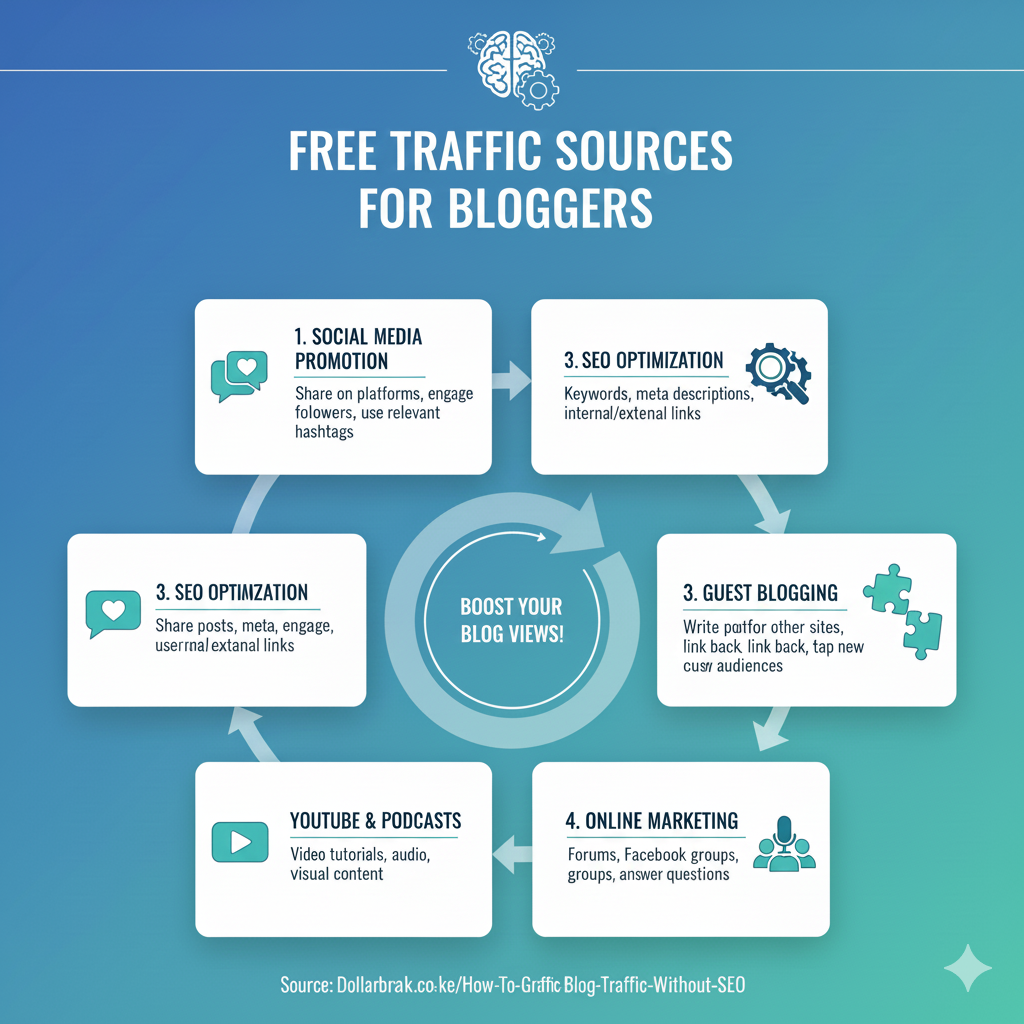
In this comprehensive guide, you’ll discover proven free traffic sources for bloggers that generate sustainable visitors without draining your wallet. You’ll learn how to drive organic blog traffic, master traffic without paid ads, implement effective blog promotion free strategies, and build social traffic blogging techniques that actually work.
These aren’t theoretical concepts. They’re practical methods that thousands of bloggers use daily to attract readers, build audiences, and create profitable blogs with zero advertising spend.
Let’s dive into the exact strategies you can start implementing today.
What Are Free Traffic Sources?
Free traffic sources are methods of attracting visitors to your blog without paying for advertisements or promotions.
These sources rely on your time, effort, and strategic content creation rather than your budget. You invest work instead of money to reach your target audience.
Think of paid traffic like renting visibility. You pay, people see your content, you stop paying, visibility disappears.
Free traffic is like owning property. You build assets (content, relationships, rankings) that continue generating visitors long after you’ve done the initial work.
The most powerful free traffic sources include search engines discovering your optimized content, social platforms sharing your posts, communities recommending your expertise, and email subscribers returning to read new articles.
While “free” means no direct monetary cost, these methods require consistent effort, strategic planning, and patience to generate results.
Why Free Traffic Sources Matter for Bloggers
Building your blog on free traffic creates sustainability and independence that paid advertising can never provide.
Financial accessibility means anyone can start. You don’t need thousands in startup capital. A college student, stay-at-home parent, or person between jobs can build a successful blog using only free methods.
Profit margins stay high. When you’re not spending money to acquire each visitor, every dollar you earn from monetization goes directly to your bottom line.
Traffic compounds over time. A blog post optimized for search engines can drive visitors for years. A pin on Pinterest keeps circulating. Quality content becomes an asset that works for you continuously.
You control your destiny. Algorithm changes on ad platforms can instantly double your costs. Free organic traffic diversifies your sources and reduces dependence on any single platform.
Trust builds naturally. People who discover you through search, recommendations, or valuable community contributions trust you more than those who clicked an ad.
Scalability has no ceiling. With paid ads, doubling your traffic means doubling your spend. With organic methods, your traffic can multiply without proportional increases in effort.
The bloggers who master free traffic sources create sustainable businesses that survive market changes, algorithm updates, and economic downturns.
Best Free Traffic Sources for Bloggers
1. Search Engine Optimization (SEO)
SEO is the foundation of sustainable organic blog traffic and the most valuable free traffic source available.
When you optimize your content for search engines, you position your blog to be discovered by people actively searching for information you provide.
The beauty of SEO is that it works 24/7. A single well-optimized blog post can attract hundreds or thousands of visitors monthly for years without additional effort.
How to implement SEO effectively:
Start with keyword research. Use free tools like Google Keyword Planner, Ubersuggest, or AnswerThePublic to discover what your target audience searches for.
Focus on long-tail keywords with lower competition. Instead of targeting “weight loss” (impossible for new blogs), target “weight loss tips for busy moms over 40.”
Create comprehensive content that thoroughly answers the search query. Aim for 1,500-2,500 words for competitive topics, covering every aspect readers need to know.
Optimize your title tag with your target keyword near the beginning. Make it compelling enough to earn clicks in search results.
Structure your content with proper H2 and H3 headings that include keyword variations naturally. Break text into short, scannable paragraphs.
Write meta descriptions that summarize your content and include your target keyword. This snippet appears in search results and influences click-through rates.
Add internal links to other relevant posts on your blog. This distributes ranking power and keeps visitors exploring your site longer.
Include high-quality images with descriptive alt text. This improves accessibility and provides another opportunity to rank in image search.
Submit your sitemap to Google Search Console and monitor how your pages perform in search results.
Timeline and expectations:
SEO is a long-term strategy. Expect minimal results in months one and two, with traffic starting to build noticeably around months three through six.
Once established, SEO becomes your most reliable traffic source, often accounting for 50-80% of total blog traffic.
2. Pinterest Marketing
Pinterest is a visual search engine that drives massive traffic to blogs in the right niches.
Unlike Instagram or Facebook where posts disappear quickly, Pinterest pins continue circulating and driving traffic for months or years after posting.
Pinterest works exceptionally well for lifestyle, food, DIY, parenting, home decor, travel, fashion, and health blogs. It’s less effective for purely text-based or technical content.
How to leverage Pinterest:
Create vertical pins sized 1000×1500 pixels using free tools like Canva. Design eye-catching graphics with clear, readable text overlays.
Make 3-5 different pin designs for each blog post. Test various images, headlines, and designs to see what resonates.
Write keyword-rich pin descriptions that explain what readers will learn. Include your target keyword naturally in the first sentence.
Create niche-specific boards that organize your content by topic. Name boards using keywords people search for.
Pin consistently. Schedule 10-15 pins daily mixing your content with curated pins from others in your niche.
Join group boards in your niche to expand your reach. Follow application instructions carefully and contribute quality pins regularly.
Claim your website on Pinterest to access analytics and enable rich pins showing extra information.
Timeline and expectations:
Pinterest can drive traffic within days of posting, but substantial traffic typically builds over 3-6 months of consistent pinning.
Many bloggers report Pinterest as their second-largest traffic source after Google, with some receiving more Pinterest traffic than search.
3. Facebook Groups
Facebook groups provide direct access to engaged communities interested in your niche topics.
These communities gather people actively seeking information, advice, and resources related to specific interests.
The key to successful group marketing is contributing genuine value rather than spamming links.
How to use Facebook groups effectively:
Search Facebook for groups related to your blog niche. Look for active communities with 1,000+ members and regular engagement.
Join 10-15 relevant groups. Read the rules carefully, as each group has different policies about self-promotion.
Become an active, helpful member first. Answer questions, share insights, and engage with other members’ posts for at least a week before sharing your own content.
When you do share blog posts, frame them as helpful resources answering common questions rather than promotional links.
Create native content directly in groups. Write valuable posts sharing tips and insights, then mention your blog post as additional reading.
Engage with comments on your posts. Respond thoughtfully to questions and continue the conversation.
Create your own Facebook group around your blog topic. This builds a community you control and directs engaged readers to your content.
Timeline and expectations:
Groups can drive immediate traffic, but sustainable results come from building reputation over weeks and months.
Focus on being genuinely helpful, and traffic will follow naturally without appearing spammy.
4. Quora Answers
Quora is a question-and-answer platform where millions of people seek expert advice on virtually every topic.
Answering questions in your niche establishes authority while driving targeted traffic to relevant blog posts.
How to use Quora for blog traffic:
Search for questions related to your blog topics. Look for questions with thousands of followers and views but few quality answers.
Write comprehensive, detailed answers (300-500 words) that provide genuine value even without clicking your link.
Include a relevant link to your blog post as “additional reading” or “more detailed explanation” at the end of your answer.
Focus on quality over quantity. One exceptional answer that gets upvoted can drive more traffic than dozens of mediocre responses.
Follow topics in your niche to receive notifications about new questions you can answer.
Add credentials to your Quora profile establishing your expertise in your niche.
Be consistent. Answer 2-3 questions weekly to maintain visibility and build authority.
Timeline and expectations:
Individual answers can drive traffic immediately if they get upvoted. Building consistent Quora traffic takes 2-3 months of regular, quality answers.
The advantage is that popular answers continue driving traffic for months or years.
5. Reddit Communities
Reddit hosts thousands of niche communities (subreddits) where passionate enthusiasts discuss specific topics.
These communities are notoriously skeptical of self-promotion, but when done correctly, Reddit can send significant targeted traffic.
How to use Reddit without getting banned:
Find subreddits related to your blog niche. Look for active communities with clear rules about self-promotion.
Read and understand each subreddit’s rules. Most allow some self-promotion if you’re an active community member.
Build karma and credibility first. Comment thoughtfully on others’ posts, share insights, and participate genuinely for several weeks.
Follow the 10:1 rule: for every self-promotional post, make 10 helpful comments or posts providing value.
When sharing your blog posts, frame them as genuinely helpful resources solving problems discussed in the community.
Participate in weekly self-promotion threads if the subreddit offers them.
Respond to comments on your posts and engage in discussion beyond just dropping links.
Timeline and expectations:
Reddit can drive sudden traffic spikes when posts gain traction, but sustainable traffic requires consistent community participation.
One popular post can send thousands of visitors in a single day, though converting them to regular readers requires quality content.
6. Email Marketing
Email marketing delivers the highest return on investment of any traffic source, free or paid.
Your email list is an audience you own completely, independent of algorithm changes or platform policies.
How to build and leverage email traffic:
Create a valuable lead magnet (checklist, template, guide, resource library) that solves a specific problem for your target audience.
Add email signup forms prominently on your blog: sidebar, end of posts, popup after visitors engage with content.
Send regular emails (weekly or biweekly) featuring your latest blog posts, tips, and updates.
Write compelling subject lines that earn high open rates. Test different approaches to see what resonates.
Make your emails valuable beyond just blog post links. Share exclusive insights, tips, or resources.
Segment your list based on interests or behavior to send more targeted content.
Include clear calls-to-action directing subscribers to specific blog posts.
Timeline and expectations:
Email list growth starts slowly, but compounds over time. Even a small list of 100-500 engaged subscribers can drive meaningful traffic.
As your list grows to thousands, email becomes a reliable traffic source generating hundreds of visits with each send.
7. Guest Posting
Guest posting places your content in front of established audiences while building valuable backlinks to your site.
This strategy combines traffic generation with SEO benefits, as quality backlinks improve your search engine rankings.
How to succeed with guest posting:
Identify blogs in your niche that accept guest posts. Look for sites with decent traffic and engagement but not so massive they’re impossible to reach.
Study their existing content to understand their style, audience, and topics they cover.
Pitch unique topic ideas they haven’t covered extensively. Explain how your post will provide value to their readers.
Write your absolute best content for guest posts. This is your audition to impress a new audience.
Include a compelling author bio with a link to a relevant resource on your blog (not just your homepage).
Promote the guest post on your social channels to show the host site you’re invested in its success.
Build relationships with site owners for potential ongoing opportunities.
Timeline and expectations:
One quality guest post can send 100-500 visitors immediately and continue driving traffic through search engines for months.
Consistent guest posting (2-4 posts monthly) builds authority and creates multiple ongoing traffic streams.
8. YouTube Videos
YouTube is the world’s second-largest search engine and a powerful source of traffic for bloggers.
Creating video content allows you to reach audiences who prefer watching over reading while establishing stronger connections through face-to-camera communication.
How to use YouTube for blog traffic:
Create videos based on your best-performing blog topics. Repurpose existing content rather than creating entirely new material.
Optimize video titles with keywords people search for on YouTube.
Write detailed video descriptions including links to related blog posts.
Add your blog URL in pinned comments and mention it verbally in videos.
Include custom thumbnails that stand out in search results and suggested videos.
Create content consistently, even if just 2-3 videos monthly.
Embed YouTube videos in your blog posts to increase watch time and create a connected ecosystem.
Timeline and expectations:
YouTube growth is slow initially but accelerates as your library expands and the algorithm recognizes your content.
Even a small channel can drive consistent traffic, with each video serving as another discovery point for your blog.
9. Medium and Other Publishing Platforms
Medium allows you to republish your blog content to reach a different audience while building backlinks.
Other platforms like LinkedIn Articles, Substack, and Dev.to provide similar opportunities depending on your niche.
How to leverage publishing platforms:
Republish your blog posts on Medium 7-14 days after posting on your blog (to ensure Google indexes your original first).
Add a canonical link pointing to your original post to avoid duplicate content issues.
Include links back to related posts on your blog throughout the content.
End republished posts with a call-to-action directing readers to your blog for more content.
Engage with comments and other writers on the platform to build visibility.
Submit your best posts to relevant Medium publications for wider distribution.
Timeline and expectations:
Publishing platforms provide immediate distribution to built-in audiences, though traffic varies significantly by post performance.
This strategy works best as supplementary traffic rather than a primary source.
10. Blog Commenting and Community Engagement
Thoughtful engagement on other blogs and forums in your niche builds relationships and generates referral traffic.
This old-school tactic still works when done genuinely rather than spammily.
How to generate traffic through engagement:
Find 10-20 popular blogs in your niche and subscribe to their newsletters.
Leave substantive comments on new posts adding genuine insights, questions, or related experiences.
Include your blog URL in the website field when commenting (most blogs link commenters’ names to their sites).
Be consistent, commenting weekly on multiple blogs to become recognizable in your niche community.
Participate in niche forums and communities, building reputation before sharing your own content.
Reply to comments on your own blog to encourage ongoing discussion and repeat visits.
Timeline and expectations:
Individual comments rarely drive significant traffic, but consistent engagement over months builds recognition and steady referral visitors.
The relationship-building aspect often leads to networking opportunities beyond just traffic.
Tools and Resources You Need
Essential Free Tools for Traffic Generation
Google Analytics tracks all your traffic sources so you understand what’s working. Monitor which sources drive the most visitors and which content resonates.
Google Search Console monitors your search engine performance. See which keywords drive traffic, identify technical issues, and track ranking improvements.
Canva creates professional graphics for Pinterest pins, social media posts, and blog images without design skills.
Buffer or Hootsuite (free plans) schedule social media posts across multiple platforms, saving time and ensuring consistency.
Ubersuggest or AnswerThePublic provide keyword research and content ideas without expensive subscriptions.
MailerLite or MailChimp (free plans) handle email marketing for lists up to 1,000-2,000 subscribers.
Yoast SEO or Rank Math (WordPress plugins) guide you through optimizing each post for search engines.
Recommended Platforms by Niche
Visual/Lifestyle Blogs (food, travel, fashion, home decor, parenting): Pinterest, Instagram, Facebook Groups
Business/Professional Blogs (marketing, entrepreneurship, career): LinkedIn, Twitter, Quora, Medium
Technology/Development Blogs: Reddit, Dev.to, Stack Overflow, YouTube
Health/Fitness Blogs: Pinterest, YouTube, Facebook Groups, Quora
Personal Finance Blogs: Reddit, Quora, Twitter, Medium
Creative/Writing Blogs: Medium, Twitter, Instagram, Pinterest
Focus your efforts on the 2-3 platforms where your specific audience is most active rather than spreading yourself thin across everything.
Time Management Strategy
Generating free traffic requires time investment. Here’s how to allocate your weekly hours effectively:
Content creation: 40-50% (writing, optimizing, editing) SEO and keyword research: 15-20% Social media and Pinterest: 20-25% Community engagement: 10-15% Email marketing: 5-10%
Track where you spend time and which activities generate the best results, then adjust your allocation accordingly.
Common Mistakes to Avoid
Spreading Yourself Too Thin
The biggest mistake bloggers make is trying to be everywhere at once.
You see a list of 10 free traffic sources and try implementing all of them simultaneously. Within a week, you’re overwhelmed, inconsistent, and seeing poor results everywhere.
Choose 2-3 traffic sources that align with your niche and strengths. Master those before expanding to others.
Quality execution on two platforms beats mediocre presence on ten.
Expecting Overnight Results
Free traffic sources build momentum gradually rather than delivering instant results.
Many bloggers implement a strategy for two weeks, see minimal traffic, and abandon it before it has time to work.
SEO takes 3-6 months. Pinterest takes 2-4 months. Community building takes consistent engagement over weeks.
Set realistic expectations and commit to strategies for at least 90 days before evaluating their effectiveness.
Only Promoting Once
Publishing a blog post and sharing it once on social media isn’t enough.
Your content should be promoted multiple times across different platforms and timeframes.
Share new posts immediately, then reshare them again 2 weeks later, a month later, and periodically afterward. Most of your audience won’t see any single social post.
Use different headlines, excerpts, and angles each time you promote the same content.
Neglecting Content Quality
No amount of promotion can compensate for mediocre content.
Free traffic sources work because they connect quality content with interested audiences. If your content doesn’t deliver value, visitors won’t return or share it.
Before focusing heavily on promotion, ensure your blog posts are comprehensive, well-written, and genuinely helpful.
One exceptional post promoted on three platforms outperforms ten average posts promoted everywhere.
Ignoring Analytics
Many bloggers create and promote content without tracking what actually works.
Install Google Analytics and Google Search Console from day one. Check your stats weekly to understand which traffic sources, content types, and topics generate the best results.
Double down on what’s working and adjust or eliminate what isn’t.
Data-driven decisions beat guesswork every time.
Being Overly Promotional
People can smell spam from a mile away, especially in communities and social platforms.
Constantly dropping blog links without providing value gets you banned from groups, downvoted on Reddit, and ignored on Quora.
Lead with value. Help genuinely. Build relationships. Share expertise freely.
When you’ve established credibility, occasional links to your blog are welcomed rather than resented.
Giving Up Too Soon
Free organic traffic follows a compound growth pattern that feels painfully slow initially.
Most bloggers quit around the 3-4 month mark, right before their efforts would have started showing significant results.
The blogs that succeed are simply those that kept going when others gave up.
Realistic Timeline and Expectations
Understanding typical growth patterns helps maintain motivation during challenging early phases.
Months 1-2: The Planting Phase
Your first two months involve massive effort with minimal visible results.
You’re creating content, setting up profiles, learning new platforms, and building foundations. Traffic might be 50-200 visitors monthly from sporadic social shares and direct visits.
This feels discouraging. You’re working hard with little to show for it.
Remember: you’re planting seeds. Trees don’t grow overnight.
Months 3-4: The Sprouting Phase
Around month three, you’ll notice green shoots appearing.
Some blog posts start appearing in search results, though usually on pages 2-5. Your Pinterest pins begin circulating. Community members start recognizing your name.
Traffic typically increases to 200-500 monthly visitors during this phase.
Results are still modest, but momentum is building beneath the surface.
Months 5-6: The Growth Phase
Months five and six bring noticeable acceleration if you’ve remained consistent.
Several posts rank on page one for less competitive keywords. Pinterest traffic increases significantly. Email subscribers start accumulating.
Many bloggers reach 500-2,000 monthly visitors during this period from primarily organic sources.
This is when the compound effect becomes visible and motivation surges.
Months 7-12: The Acceleration Phase
The second half of your first year is where free traffic sources really pay off.
Your content library is substantial enough that older posts continue driving consistent traffic. Backlinks accumulate. Authority builds.
Realistic traffic for this period ranges from 2,000-10,000 monthly visitors, with exceptional cases exceeding these numbers.
Multiple traffic sources work simultaneously, creating a diversified foundation.
Beyond Year One
After twelve months of consistent effort using free traffic methods, growth becomes more predictable.
Bloggers who maintain consistency through year one typically see continued growth in year two, often reaching 10,000-50,000+ monthly visitors without spending money on advertising.
The key is surviving those difficult early months when results don’t match effort.
Pros and Cons of Free vs. Paid Traffic
Free Organic Traffic
Pros:
- No monetary cost, only time investment
- Builds sustainable, compounding traffic
- Creates owned assets (rankings, content, relationships)
- Higher trust from audiences
- Better profit margins on monetization
- No dependency on advertising budgets
Cons:
- Results take 3-6 months to materialize
- Requires consistent effort and patience
- Learning curve for each platform and strategy
- Algorithm changes can impact results
- Time-intensive, especially initially
Paid Advertising
Pros:
- Immediate traffic when ads go live
- Precisely targeted to specific audiences
- Scalable by increasing budget
- Predictable traffic volume
- Fast testing of offers and content
Cons:
- Ongoing cost for every visitor
- Traffic stops when budget runs out
- Can be expensive, especially in competitive niches
- Platform dependency and policy risks
- Lower profit margins
- Doesn’t build long-term assets
The smartest approach for most bloggers is building a foundation of free traffic sources first, then selectively using paid advertising to amplify what’s already working.
Frequently Asked Questions
Can you really get blog traffic without spending money?
Yes, absolutely. Thousands of successful blogs generate 10,000+ monthly visitors using only free traffic methods like SEO, Pinterest, social media, and community engagement. While paid ads can accelerate growth, they’re not necessary. Free traffic sources require more time and consistent effort but create sustainable growth without ongoing costs. Many profitable blogs have never spent a dollar on advertising.
Which free traffic source works fastest for new blogs?
Social media platforms, particularly Pinterest and Facebook groups, typically drive the fastest initial traffic for new blogs. You can see visitors within days of posting and promoting content. However, while social traffic comes quickly, search engine optimization provides the most sustainable long-term results. The ideal strategy combines quick wins from social platforms with the long-term asset building of SEO.
How much time do free traffic methods require?
Expect to invest 10-20 hours weekly on traffic generation activities including content creation, promotion, and community engagement. In the beginning, you’ll spend more time learning and setting up systems. As you establish routines and systems, efficiency improves. Many successful bloggers report spending about 60% of their time creating content and 40% promoting it across free channels.
Is SEO or social media better for organic blog traffic?
SEO typically becomes the most valuable long-term traffic source, often providing 50-70% of total traffic for established blogs. However, social media delivers faster initial results while you wait for SEO to build. Pinterest works exceptionally well for visual niches, driving sustained traffic similar to search engines. The best approach combines both: create SEO-optimized content and actively promote it on relevant social platforms.
Do I need technical skills to implement these free traffic strategies?
No advanced technical skills are required. Basic skills like creating graphics in Canva, writing optimized content, and engaging in social communities are easily learned. Most platforms offer intuitive interfaces and free tutorials. The most important skills are consistency, strategic thinking, and willingness to learn. If you can write a blog post, you can implement these traffic strategies.
How do I know which free traffic sources will work for my niche?
Your niche largely determines which platforms will be most effective. Visual niches (food, travel, fashion, home decor) thrive on Pinterest and Instagram. Business and professional topics perform well on LinkedIn, Twitter, and Quora. Technical content succeeds on Reddit and YouTube. Test 2-3 platforms where your target audience is active, track results in Google Analytics for 90 days, then double down on what’s working.
Can free traffic methods compete with blogs that spend money on ads?
Yes, free traffic often outperforms paid advertising for long-term sustainability. While paid ads can drive immediate volume, organic traffic from search engines and social platforms continues flowing without ongoing costs. Many successful bloggers report that their organic traffic eventually far exceeds anything they could afford through paid advertising. The key is patience and consistency during the 3-6 month building phase.
Final Verdict and Action Steps
Free traffic sources provide the foundation for sustainable blog growth without requiring advertising budgets.
The strategies outlined in this guide work. They’ve built successful blogs across every niche imaginable. They’re proven, reliable, and accessible to anyone willing to invest consistent effort.
The catch is that organic traffic requires patience. Results don’t appear overnight. The first 2-3 months test your commitment when you’re working hard with little visible progress.
But here’s the truth: those difficult early months are temporary. The traffic you build through free methods becomes an asset that compounds over time.
A blog post ranking on page one of Google drives visitors for years. A popular Pinterest pin circulates for months. Email subscribers return repeatedly. Community relationships lead to ongoing opportunities.
Paid ads are like renting traffic. Free organic methods are like buying property that appreciates in value.
Your 30-Day Action Plan
Week 1: Foundation
Set up Google Analytics and Google Search Console to track traffic. Research 15-20 long-tail keywords in your niche with 300-1,500 monthly searches. Create a content calendar for your next 8-12 blog posts targeting these keywords.
Week 2: Content and Social Setup
Write and publish your first SEO-optimized blog post (1,500+ words). Create Pinterest account and design 5 pins for your post using Canva. Set up email signup forms on your blog with a simple lead magnet.
Week 3: Platform Expansion
Publish your second optimized blog post. Join 10 relevant Facebook groups and begin engaging genuinely. Sign up for Quora and answer 2 questions in your niche. Start pinning consistently on Pinterest (10-15 pins daily).
Week 4: Community Building
Publish your third blog post. Find 3-5 subreddits in your niche and begin participating. Search for guest posting opportunities and reach out to 3 blogs. Write your first email to your growing list.
Beyond the First Month
Commit to this plan for at least six months:
Publish one SEO-optimized blog post weekly (minimum). Promote each post across 3-4 platforms consistently. Spend 30 minutes daily engaging in communities where your audience gathers. Track your analytics weekly and adjust based on what’s working.
The bloggers who succeed with free traffic sources aren’t those with special secrets or connections. They’re simply the ones who implemented these strategies consistently while others gave up.
Your blog’s future doesn’t depend on your advertising budget. It depends on your willingness to show up consistently, provide genuine value, and keep going when results seem slow.
The traffic sources outlined here are waiting for you. Your ideal readers are searching for content you can create. The only question is whether you’ll commit to the process long enough to reap the rewards.
Start today. Stay consistent. Build your free traffic empire one blog post at a time.