How to Grow Blog Traffic Without SEO: Complete Non-Google Strategy

 TIMEBUCKS
Low minimum
payout of just
$3 — start
earning today!
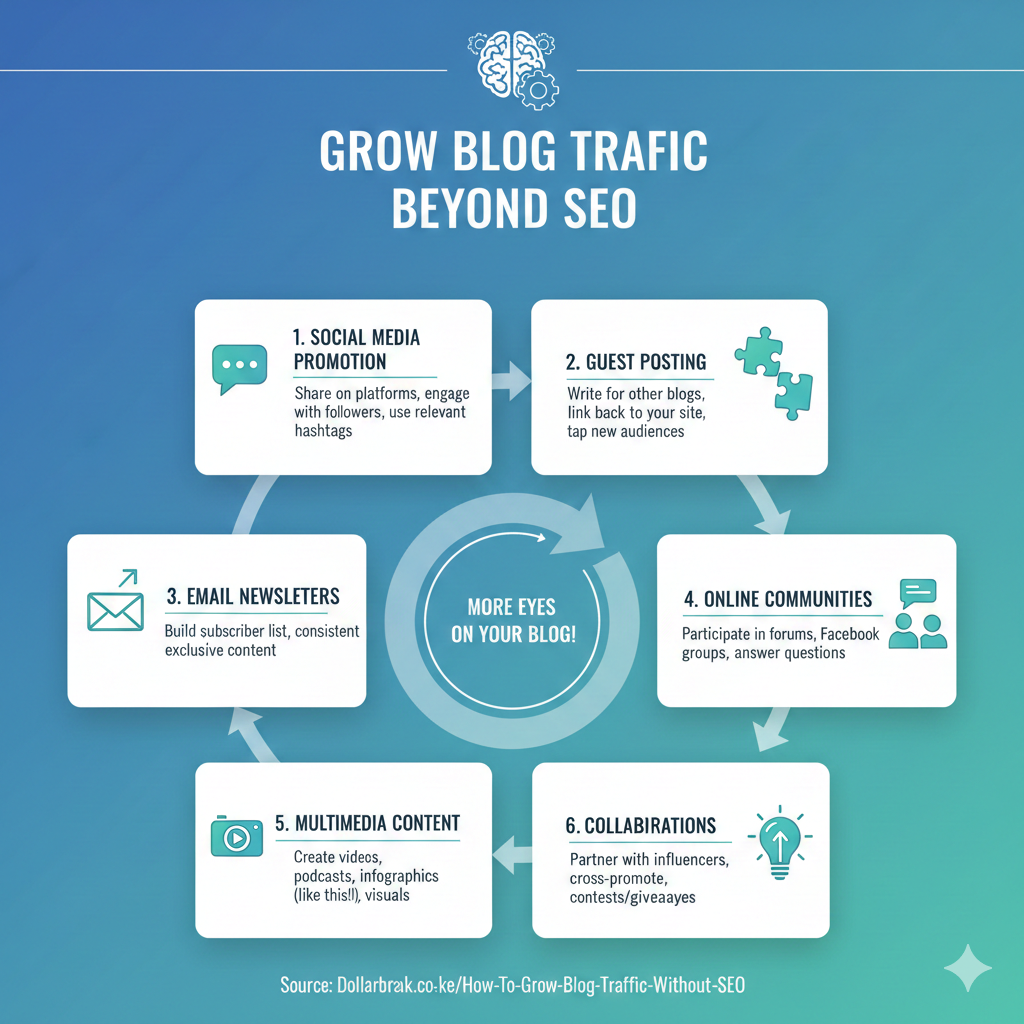
You can grow blog traffic without SEO by leveraging Pinterest marketing, building an engaged email list, creating shareable social media content, participating in niche communities, guest posting on established blogs, repurposing content for YouTube and podcasts, networking with other bloggers, and using direct referral traffic strategies. These methods generate traffic without Google by focusing on social platforms and relationship building.
Introduction
You’ve been told that SEO is the only way to build blog traffic. That without ranking on Google, your blog is destined to fail.

But what if you hate keyword research? What if waiting 6-12 months for search rankings feels impossible? What if you simply want to explore alternative traffic strategies?
Here’s the truth: some of the internet’s most successful content creators barely touch SEO. They’ve built massive audiences entirely through social platforms, communities, and direct relationships.
SEO is powerful, but it’s not the only path. In fact, depending on your niche and personality, non-SEO traffic strategies might actually work better for you.
In this comprehensive guide, you’ll learn exactly how to grow blog traffic without SEO. You’ll discover proven methods for generating traffic without Google, master social media blogging traffic techniques, build powerful referral traffic blogging systems, and create a sustainable audience without ever touching keyword research.

These aren’t theoretical concepts. They’re battle-tested strategies that bloggers use daily to build thriving audiences while completely bypassing traditional search optimization.
Let’s explore how to succeed when Google isn’t your primary traffic source.
What Does Growing Blog Traffic Without SEO Mean?
Growing blog traffic without SEO means building your audience through channels other than search engine rankings.
Instead of optimizing content for Google’s algorithm, you focus on platforms where people actively engage, share, and discover content through social connections and recommendations.
Think of traditional SEO like opening a store on a busy street and waiting for people to walk by. Growing traffic without SEO is more like building relationships, getting recommendations, and meeting people where they already gather.
These alternative strategies include social platforms like Pinterest and Instagram, community engagement in groups and forums, direct email relationships, video platforms like YouTube and TikTok, and collaborative opportunities like guest posts and podcast appearances.

The fundamental difference is that you’re building direct relationships with your audience rather than depending on search algorithms to connect you with readers.
TIMEBUCKS
Low minimum
payout of just
$3 — start
earning today!
Many successful bloggers use hybrid approaches, combining some SEO with strong non-Google traffic sources. But it’s entirely possible to build a profitable blog with minimal or zero focus on search rankings.
Why Consider Traffic Strategies Without SEO?
Building traffic independent of search engines offers unique advantages that traditional SEO can’t match.

Faster initial results mean you can start seeing visitors within days instead of waiting months for search rankings. Social posts and community engagement drive immediate traffic.
Less technical complexity removes barriers for bloggers who find SEO overwhelming. You don’t need to master technical optimization, schema markup, or algorithm updates.
TIMEBUCKS
Low minimum
payout of just
$3 — start
earning today!
Direct audience relationships create stronger connections than anonymous Google visitors. People who discover you through communities or social platforms engage more deeply.
Algorithm independence protects you from Google updates that can devastate search-dependent blogs overnight. Diversified traffic sources create stability.
Natural content creation lets you write freely without obsessing over keyword density or search intent. Your content can be more conversational and personality-driven.
Platform leverage means you can build on networks with existing audiences rather than starting from zero visibility.
Better for certain niches like entertainment, current events, personal brands, and visual content that naturally thrive on social platforms.
Personality-driven growth favors bloggers who excel at networking, video content, or community building over technical optimization.
The bloggers who succeed without SEO typically have strong social media skills, enjoy networking, create visually appealing content, or operate in niches where community engagement matters more than search traffic.
Proven Strategies to Grow Blog Traffic Without SEO
1. Master Pinterest Marketing
Pinterest is the single most powerful non-Google traffic source for bloggers, functioning as a visual discovery engine rather than a traditional social network.
Unlike Instagram where posts disappear quickly, Pinterest pins continue circulating and driving traffic for months or years after posting.
Pinterest works exceptionally well for food, DIY, home decor, parenting, fashion, travel, wedding planning, and lifestyle content. It’s the closest alternative to SEO in terms of sustainable, long-term traffic.
How to build Pinterest traffic:
Create a business account and claim your website to access analytics and enable rich pins.
Design vertical pins sized 1000×1500 pixels using Canva. Use bold text overlays, bright colors, and images that stand out in feeds.
Make 5-10 different pin designs for each blog post. Test various headlines, images, and color schemes to identify what resonates.
Write compelling pin descriptions (200-300 characters) that explain exactly what readers will learn. Include calls-to-action like “Click to read more” or “Save this for later.”
Create themed boards organizing your content by specific topics. Use keyword-rich board names like “Quick Weeknight Dinners” instead of vague names like “Food.”
Pin consistently every single day. Schedule 15-20 pins daily mixing fresh content (your new posts), your best-performing older pins, and curated pins from others.
Join group boards in your niche to expand your reach beyond your own followers. Apply to boards with active engagement and thousands of followers.
Create idea pins (Pinterest’s native content format) directly on the platform. These multi-page visual stories receive priority in the algorithm.
Engage with other pinners by repinning, commenting, and following accounts in your niche. Pinterest rewards platform engagement.
Why Pinterest works without SEO:
Pinterest has its own internal search algorithm completely separate from Google. Optimizing for Pinterest search requires different strategies than Google SEO.
The visual, inspiration-focused nature of Pinterest makes it perfect for discovering new blogs and content creators.
Pins act as perpetual marketing machines, continuing to be discovered and shared long after you post them.
Expected results:
With consistent effort, Pinterest can drive 1,000-5,000 monthly visitors within 3-4 months and 10,000+ monthly visitors within 6-12 months.
Many bloggers report Pinterest as their number one traffic source, surpassing all other channels including Google.
2. Build and Leverage Your Email List
Email marketing provides the most direct relationship with your audience and the highest ROI of any traffic channel.
Your email list is an asset you completely control, independent of any platform’s algorithm or policy changes.
How to grow and use email for traffic:
Create an irresistible lead magnet that solves a specific problem for your target audience. Examples include checklists, templates, toolkits, mini-courses, resource libraries, or exclusive content.
Add multiple email signup opportunities throughout your blog: prominent sidebar forms, end-of-post signup boxes, and strategic popups triggered after 30-60 seconds of engagement.
Use a compelling headline for your signup forms focusing on benefits, not features. “Get My Free Meal Planning Template” beats “Subscribe to My Newsletter.”
Choose an email service provider with a good free plan like MailerLite, ConvertKit, or MailChimp to start.
Send emails consistently, at least weekly or biweekly. Every email should link back to your latest blog posts and best content.
Write valuable emails that go beyond just announcing new posts. Share exclusive tips, personal stories, or bonus content that makes subscribers feel special.
Create email-exclusive content that incentivizes people to stay subscribed. Offer resources, insights, or deals not available on your blog.
Segment your list based on interests or behavior to send more targeted content. People engage more with relevant emails.
Use compelling subject lines that earn high open rates. Test different approaches to see what your audience responds to.
Why email works without SEO:
Email delivers traffic on demand. When you send an email, you immediately see visitors flooding to your blog.
Email subscribers are your warmest audience, most likely to engage, share, and convert to customers.
Email bypasses all algorithms and platform restrictions, putting your content directly in front of people who want it.
Expected results:
Even a small list of 500-1,000 engaged subscribers can drive 200-500 visits per email send.
As your list grows to 5,000-10,000 subscribers, each email can drive thousands of visitors to your blog.
The key is consistently growing your list through every traffic channel you use.
3. Create Engaging Social Media Content
Social media platforms offer direct access to billions of users discovering and sharing content daily.
While organic reach has declined on some platforms, strategic social media blogging traffic strategies still work effectively.
Platform-specific strategies:
Instagram: Share valuable carousel posts (multi-slide educational content), reels with hooks that stop scrolling, and stories driving traffic through swipe-up links (10k+ followers) or link stickers.
TikTok: Create short, entertaining videos sharing tips, behind-the-scenes content, or relatable moments related to your niche. Include your blog link in bio and mention it in videos.
Twitter/X: Share actionable tips in threads, engage genuinely with others in your niche, and link to relevant blog posts when appropriate. Build relationships through consistent presence.
LinkedIn: Post valuable insights, industry commentary, and professional content. Publish LinkedIn articles linking back to your blog. Engage with other professionals’ content.
Facebook: Share posts in your own profile/page, but focus more energy on Facebook groups (covered separately).
How to drive blog traffic from social:
Create platform-native content first, then direct engaged audiences to your blog for deeper dives. Don’t just drop blog links without context.
Use the “value first, link second” approach. Provide substantial value in the social post itself, then offer your blog post as additional reading.
Include clear calls-to-action telling people exactly what to do: “Read the full guide in my bio” or “Link in comments.”
Post consistently at optimal times when your audience is most active. Quality matters more than quantity, but consistency builds momentum.
Engage genuinely with others in your niche. Comment thoughtfully, share others’ content, and build real relationships.
Use platform features like Instagram Stories polls, question boxes, and engagement stickers to build community.
Repurpose your blog content into platform-appropriate formats. Turn a blog post into a carousel, video, or thread.
Expected results:
Social media traffic tends to be spiky rather than consistent. A viral post can send thousands of visitors in a day, then return to baseline.
Building sustainable social traffic requires consistent posting and community building over 3-6 months.
Most bloggers use social media to build awareness and email lists rather than as a primary traffic source.
4. Engage Strategically in Niche Communities
Online communities gather your exact target audience in specific locations, making them goldmines for targeted referral traffic blogging.
These communities exist on various platforms: Facebook groups, Reddit, forums, Discord servers, Slack communities, and niche websites.
How to generate community traffic:
Identify where your target audience gathers. Search for Facebook groups, subreddits, forums, and communities related to your blog topic.
Join 10-15 active communities with clear rules about sharing content. Read guidelines carefully to understand self-promotion policies.
Become a genuine, helpful member first. Spend 2-3 weeks answering questions, sharing insights, and engaging before sharing your own content.
When you do share blog posts, frame them as helpful resources solving problems discussed in the community, not promotional spam.
Follow the 10:1 rule: for every piece of self-promotion, make 10 value-adding contributions without any self-interest.
Create community-specific content addressing questions or topics frequently discussed in that specific group.
Respond to comments when people reply to your posts. Continue the conversation and build relationships.
Participate in weekly self-promotion threads if communities offer them. These designated spaces welcome link sharing.
Platform-specific community strategies:
Facebook Groups: Answer questions daily, participate in discussions, share insights, and post your blog content 1-2 times weekly when relevant to active discussions.
Reddit: Build karma and credibility for weeks before sharing links. Focus on niche subreddits where your expertise matters. Participate in discussions beyond just promoting content.
Niche Forums: Create a helpful signature including your blog link. Answer questions thoroughly, becoming known as a helpful expert. Share blog posts as resources when directly relevant.
Discord/Slack: Join niche communities and become active in conversations. Share expertise freely and mention your blog when it adds value to discussions.
Expected results:
Community engagement provides steady, targeted traffic rather than massive volume. Expect 100-500 monthly visitors per active community.
The real value is quality over quantity. Community traffic converts better because these visitors already know and trust you.
5. Guest Post on Established Blogs
Guest posting places your content in front of established audiences while building valuable referral traffic and authority.
This strategy works regardless of your search rankings because you’re borrowing other people’s audiences.
How to succeed with guest posting:
Research blogs in your niche accepting guest contributions. Look for sites with engaged audiences and decent traffic, not necessarily massive publications.
Study each blog’s existing content, writing style, and audience. Understand what topics resonate and what gaps you could fill.
Pitch specific, detailed topic ideas that would benefit their audience. Explain why you’re qualified to write on the topic and what unique angle you’ll provide.
Write your absolute best content for guest posts. This is your opportunity to make a strong first impression on a new audience.
Include a compelling author bio with a call-to-action linking to a relevant, valuable resource on your blog (not just your homepage).
Promote the guest post enthusiastically on your own channels. Show the host site that you’re invested in the post’s success.
Build relationships with editors and other guest contributors for ongoing opportunities.
Where to find guest posting opportunities:
Search “[your niche] + write for us” or “[your niche] + guest post” in Google.
Follow blogs you admire and watch for guest posting announcements or guidelines.
Join blogger networks and communities where guest posting opportunities are shared.
Reach out directly to blogs you respect, even if they don’t advertise guest posting. Many accept quality contributions.
Expected results:
One quality guest post on a moderately popular blog can send 200-1,000 visitors immediately and continue driving traffic for months.
Consistent guest posting (2-4 posts monthly) builds authority and creates multiple ongoing traffic streams.
The compounding effect of multiple guest posts creates a sustainable referral traffic system.
6. Create YouTube Videos Linking to Your Blog
YouTube is the world’s second-largest search engine, but it operates completely differently from Google’s text-based search.
Video content reaches audiences who prefer watching over reading while establishing stronger personal connections.
How to use YouTube for blog traffic:
Create videos based on your most popular blog topics. Repurpose existing content rather than creating entirely new material.
Optimize video titles with questions and topics people search for on YouTube (which differs from Google keyword research).
Write detailed video descriptions including timestamps, key takeaways, and links to related blog posts.
Mention your blog verbally in videos: “I’ve written a detailed guide on this topic with templates and examples. Check the description for the link.”
Add your blog URL in pinned comments and include cards/end screens directing viewers to your website.
Create consistent content, even if just 2-4 videos monthly. YouTube rewards consistent uploaders.
Embed YouTube videos in your blog posts to create a connected ecosystem driving traffic both directions.
Engage with comments on every video to build community and encourage return viewership.
Content types that work:
Tutorial and how-to videos demonstrating processes covered in your blog posts.
Behind-the-scenes content showing your process, workspace, or daily routine.
Opinion and commentary videos on topics in your niche.
Q&A videos answering common questions, with links to detailed blog answers.
Expected results:
YouTube growth is slow initially but accelerates as your video library expands and the algorithm recognizes your content.
Even a small channel with 500-2,000 subscribers can drive consistent blog traffic, especially if you clearly direct viewers to your site.
7. Leverage Medium and Content Syndication
Medium and similar platforms let you republish content to reach built-in audiences without requiring search rankings.
This strategy builds exposure and referral links while diversifying your traffic sources.
How to use content syndication:
Republish your blog posts on Medium 7-14 days after posting on your blog (giving your original content time to be indexed first if you use any SEO).
Add a canonical link to your original post to tell search engines where the content originated.
Include 2-3 links back to related posts on your blog throughout the syndicated content.
End syndicated posts with a clear call-to-action: “For more content like this, visit [your blog].”
Submit your best posts to relevant Medium publications for wider distribution to their audiences.
Engage with other writers on Medium by reading, commenting, and highlighting content.
Cross-post to platforms like Dev.to (for technical content), Hashnode (for developers), or Substack (for newsletters).
Expected results:
Medium traffic varies significantly. Some posts get dozens of views while others reach thousands through publication features or distribution.
This works best as supplementary traffic rather than a primary source, but consistent syndication can drive 500-1,000 monthly visitors.
8. Network with Other Bloggers
Building relationships with other bloggers in your niche creates collaboration opportunities, cross-promotion, and referral traffic.
Think of it as forming a mutual support network where everyone benefits from shared audiences.
How to network effectively:
Follow and genuinely engage with 20-30 bloggers in your niche. Comment on their posts, share their content, and build real relationships.
Reach out to bloggers with similar audience sizes for collaboration opportunities: joint webinars, podcast interviews, resource roundups, or content swaps.
Participate in blogger link-ups, collaborative posts, and round-up articles that include multiple bloggers’ contributions.
Create resource posts linking to other bloggers’ best content. Many will share these posts with their audiences, driving traffic back to you.
Interview other bloggers on your blog and ask them to share the post with their audiences.
Join blogger masterminds, paid communities, or free groups where networking happens naturally.
Attend virtual or in-person blogging conferences and events to build relationships.
Expected results:
Networking is a long-term relationship strategy rather than a quick traffic win. However, one strong relationship with a blogger in your niche can drive consistent referral traffic for months or years.
9. Start a Podcast Linking to Your Blog
Podcasting builds intimate relationships with listeners who often become loyal blog readers.
Audio content reaches people during commutes, workouts, or household tasks when they can’t read blog posts.
How to use podcasting for blog traffic:
Start simple with basic equipment. Your smartphone and a quiet room are enough to begin.
Base podcast episodes on your blog content. Discuss topics you’ve written about, going deeper or taking different angles.
Mention your blog in every episode: “For detailed show notes, templates, and resources I mentioned, visit [your blog].”
Include links to relevant blog posts in show notes and episode descriptions.
Repurpose podcast content into blog posts and vice versa, creating multiple content pieces from single ideas.
Invite guests who will share the episode with their audiences, expanding your reach.
Submit your podcast to Apple Podcasts, Spotify, and other directories.
Expected results:
Podcast growth is gradual, but engaged listeners become highly loyal readers. Even a small podcast audience of 500-1,000 listeners per episode can drive meaningful blog traffic.
10. Create and Share Valuable Resources
Creating exceptional free resources that people naturally want to share generates organic referral traffic without any promotion.
These assets become link magnets that bloggers, communities, and social media users reference repeatedly.
Types of shareable resources:
Comprehensive toolkits or resource libraries curating the best tools, websites, or resources in your niche.
Original templates, worksheets, or checklists that solve specific problems.
Data-driven reports or surveys providing unique insights your niche cares about.
Interactive tools, calculators, or quizzes that provide personalized results.
Ultimate guides covering topics more thoroughly than anyone else.
Free courses or challenges delivered via email that bring people back to your blog.
How to create link-worthy resources:
Identify what your audience struggles with most. Create the resource you wish existed.
Make it genuinely valuable, not just a lead magnet disguised as helpful content.
Design it professionally using tools like Canva or hire a designer for a polished look.
Host it on your blog so accessing it brings people to your site.
Promote it everywhere: social media, communities, email, guest posts, podcast mentions.
Encourage sharing by making it easy to reference and link to.
Expected results:
One exceptional resource can drive thousands of visitors over months or years as it gets shared and referenced across the internet.
This strategy requires significant upfront effort but creates compounding referral traffic over time.
Tools and Resources for Non-SEO Traffic
Essential Free Tools
Canva creates professional graphics for Pinterest, social media, and visual content without design skills.
Buffer or Later schedule social media posts across multiple platforms, maintaining consistency without daily manual posting.
MailerLite or ConvertKit (free plans) handle email marketing for growing lists.
Pinterest Analytics (built into business accounts) shows which pins drive the most traffic and engagement.
Google Analytics tracks all your traffic sources so you understand which non-SEO channels work best.
Linktree or Beacons create landing pages consolidating multiple links for Instagram, TikTok, and other single-link-bio platforms.
OBS Studio records screen and webcam videos for YouTube content creation.
Anchor (by Spotify) provides free podcast hosting and distribution.
Platform-Specific Tools
For Pinterest: Tailwind ($9.99/month) automates pinning and provides analytics showing optimal posting times.
For Social Media: Metricool or Hootsuite track performance across multiple platforms in one dashboard.
For Email: ConvertKit ($9/month after free tier) offers powerful automation and segmentation for growing lists.
For Video: Descript transcribes and edits video content, making YouTube creation easier.
Time Allocation Strategy
When growing traffic without SEO, allocate your weekly hours differently than traditional bloggers:
Content creation: 30-40% (less time on SEO optimization) Social media and Pinterest: 30-35% Email marketing: 10-15% Community engagement: 15-20% Networking and collaborations: 5-10%
Track results from each channel and adjust time allocation toward your most effective traffic sources.
Common Mistakes to Avoid
Abandoning SEO Completely Without Reason
Just because you’re focusing on non-SEO traffic doesn’t mean you should actively work against search visibility.
Simple, basic optimization like using clear titles, organizing content with headings, and writing quality content helps even if you’re not doing keyword research.
Some bloggers rebel against SEO so completely that they create obstacles preventing any search traffic. This is unnecessarily limiting.
Spreading Yourself Too Thin Across Too Many Platforms
Trying to maintain active presences on Pinterest, Instagram, TikTok, YouTube, Medium, Twitter, Facebook groups, Reddit, and email simultaneously leads to burnout and mediocre results everywhere.
Choose 2-3 channels that align with your strengths and audience, then master those before expanding.
Quality presence on two platforms beats scattered activity on ten.
Posting Without Engaging
Social media and community traffic require genuine interaction, not just broadcasting your content.
Dropping blog links without engaging with others’ content, answering comments, or participating in conversations makes you invisible or annoying.
Spend at least as much time engaging with others as promoting your own content.
Inconsistent Posting Schedules
Non-SEO traffic sources reward consistency even more than search optimization.
Social media algorithms favor accounts that post regularly. Communities notice and value consistent contributors. Email subscribers expect regular communication.
Posting sporadically when you feel inspired won’t build momentum. Create realistic schedules you can maintain long-term.
Neglecting Email List Building
Many bloggers focus exclusively on social media without capturing email addresses.
Social platforms change algorithms, ban accounts, or decline in popularity. Email is the one channel you completely control.
Every traffic strategy should ultimately convert visitors into email subscribers for sustainable, owned audience growth.
Creating Content Without Calls-to-Action
Bloggers often create great social content or community posts but forget to direct people to their blog.
Every piece of content should include a clear, specific call-to-action telling people exactly what to do next.
“Check out my blog” is vague. “Link in bio for the complete tutorial with templates” is specific and compelling.
Expecting Overnight Viral Success
While non-SEO traffic can work faster than search rankings, it still requires consistent effort over months.
Hoping for viral posts to explode your blog is gambling, not strategy. Sustainable growth comes from showing up consistently.
Realistic Timeline and Expectations
Weeks 1-4: Setup and Learning
Your first month involves setting up profiles, learning platforms, and finding your rhythm.
You might see small traffic spikes from social shares or community posts, but expect 50-200 monthly visitors during this phase.
This period feels like shouting into the void, but you’re building foundations.
Months 2-3: Consistency Building
Months two and three are about establishing consistent habits and seeing which channels resonate.
Pinterest pins start circulating. Social posts occasionally get meaningful engagement. Community members recognize your name.
Expect traffic to grow to 200-500 monthly visitors from non-SEO sources during this phase.
Months 4-6: Momentum Building
Around month four, you’ll notice real momentum building across your chosen channels.
Pinterest traffic often increases significantly. Email list grows to 200-500 subscribers. Social following increases. Community reputation strengthens.
Many bloggers reach 500-2,000 monthly visitors from non-SEO sources during this period.
Months 7-12: Growth Acceleration
The second half of year one brings acceleration as your consistent efforts compound.
Pinterest may become your largest traffic source. Email list drives predictable traffic. Social platforms deliver steady visitors. Collaborations and guest posts multiply reach.
Realistic targets for this period range from 2,000-10,000 monthly visitors, depending on niche and effort intensity.
Beyond Year One
After twelve months of consistent non-SEO traffic building, growth becomes more predictable.
Your audience knows you. Your content circulates. Your network expands. Opportunities multiply.
Many bloggers focusing primarily on non-SEO methods reach 10,000-30,000+ monthly visitors in year two while maintaining minimal search engine focus.
The key is choosing channels you genuinely enjoy and can sustain consistently.
Frequently Asked Questions
Is it really possible to grow a blog without SEO?
Yes, absolutely. Many successful bloggers generate 50,000+ monthly visitors with minimal SEO focus by mastering Pinterest, email marketing, social media, and community building. While SEO is powerful, it’s not the only path to blog success. Bloggers in visual niches, personal brand spaces, and current event topics often thrive without heavy search optimization. The key is focusing intensely on 2-3 non-SEO channels rather than spreading efforts thin.
Which non-SEO traffic source works fastest?
Social media platforms like Instagram, TikTok, and Facebook can drive immediate traffic within hours of posting. Pinterest typically drives traffic within days and compounds over weeks. Email marketing delivers instant traffic when you send campaigns. For fastest initial results, focus on social platforms and communities where your target audience already gathers. However, Pinterest often becomes the most sustainable long-term non-SEO traffic source.
Can you make money from a blog without Google traffic?
Yes, many profitable blogs generate most revenue without significant Google traffic. Bloggers earning through sponsored posts, affiliate marketing, digital products, and services often build audiences primarily through social media and email. In fact, social media blogging traffic sometimes converts better than search traffic because the audience knows and trusts you. The key is building an engaged, loyal audience regardless of where they come from.
How much time do non-SEO traffic strategies require weekly?
Expect to invest 10-20 hours weekly on traffic generation including content creation, social media management, community engagement, and email marketing. Pinterest requires 30-60 minutes daily for scheduling pins. Social media needs 20-30 minutes daily for posting and engagement. Email marketing requires 2-3 hours weekly. The time investment is similar to SEO but allocated differently, focusing on platforms and relationships rather than keyword research and optimization.
Should I ignore SEO completely if focusing on other traffic sources?
No, you shouldn’t actively work against SEO even if it’s not your focus. Basic best practices like clear titles, organized content with headings, and quality writing help readers and search engines. The difference is not obsessing over keyword research, backlink building, and technical optimization. Many successful bloggers do “SEO lite”—following basic principles without making it their primary strategy. This allows some organic search traffic without the intensive effort SEO demands.
What if my blog niche doesn’t work well on visual platforms like Pinterest?
Focus on community-based strategies instead. Technical blogs, business content, and text-heavy niches often thrive in Reddit communities, niche forums, LinkedIn, Twitter, and guest posting. Build your email list aggressively and create valuable resources that generate referral traffic. Consider starting a podcast or YouTube channel explaining concepts verbally. Not every niche needs Pinterest—choose channels where your specific audience actively engages.
How long before non-SEO traffic becomes sustainable?
Most bloggers see consistent traffic from non-SEO sources within 4-6 months of focused effort. Pinterest typically kicks in around month 3-4. Social media following builds over 3-6 months. Email list becomes a significant traffic driver after 6-12 months. The advantage over SEO is seeing results faster—weeks rather than months—but sustainability still requires consistent effort over at least a quarter. Expect gradual momentum building rather than overnight success.
Final Verdict and Action Steps
Growing blog traffic without SEO is not only possible but often faster and more engaging than waiting for search rankings.
The strategies outlined in this guide work across niches, audience sizes, and experience levels. They’re proven by thousands of successful bloggers who’ve built thriving audiences without heavy SEO focus.
The key is choosing channels that align with your strengths and audience, then committing to consistent execution for at least six months.
If you enjoy visual content creation, Pinterest and Instagram are your best bets. If you love community interaction, focus on Facebook groups and Reddit. If you’re comfortable on camera, YouTube and TikTok offer massive potential. If you prefer writing, email marketing and Medium work beautifully.
There’s no single “right” approach. The best traffic strategy is the one you’ll actually implement consistently.
Publish 1-2 blog posts weekly without keyword research stress. Focus on valuable, shareable content your audience genuinely needs.
Spend 30 minutes daily on your primary traffic channel (Pinterest pinning, social media engagement, or community participation).
Grow your email list aggressively. Aim for 50-100 new subscribers monthly in early months.
Engage authentically in communities 3-4 times weekly. Build real relationships, not just drop links.
Track your analytics weekly. Notice which specific posts, pins, or social content drives the most traffic. Create more of what works.
The bloggers who succeed without SEO aren’t those with secret tricks. They’re the ones who picked channels they enjoyed, showed up consistently, and kept going when results were slow.
Your blog’s future doesn’t depend on Google’s algorithm. It depends on your ability to build genuine connections with your audience wherever they gather.
The traffic sources are waiting. Your ideal readers are scrolling Pinterest, browsing communities, and checking email right now. The only question is whether you’ll show up consistently enough to reach them.
Start today. Pick your two channels. Create your first piece of content. Begin building traffic on your own terms, without SEO stress.
Your audience is out there. Go meet them where they already are.
TIMEBUCKS
Low minimum
payout of just
$3 — start
earning today!